

The new Visegrád axis: Czechia’s illiberal turn weakens EU cohesion
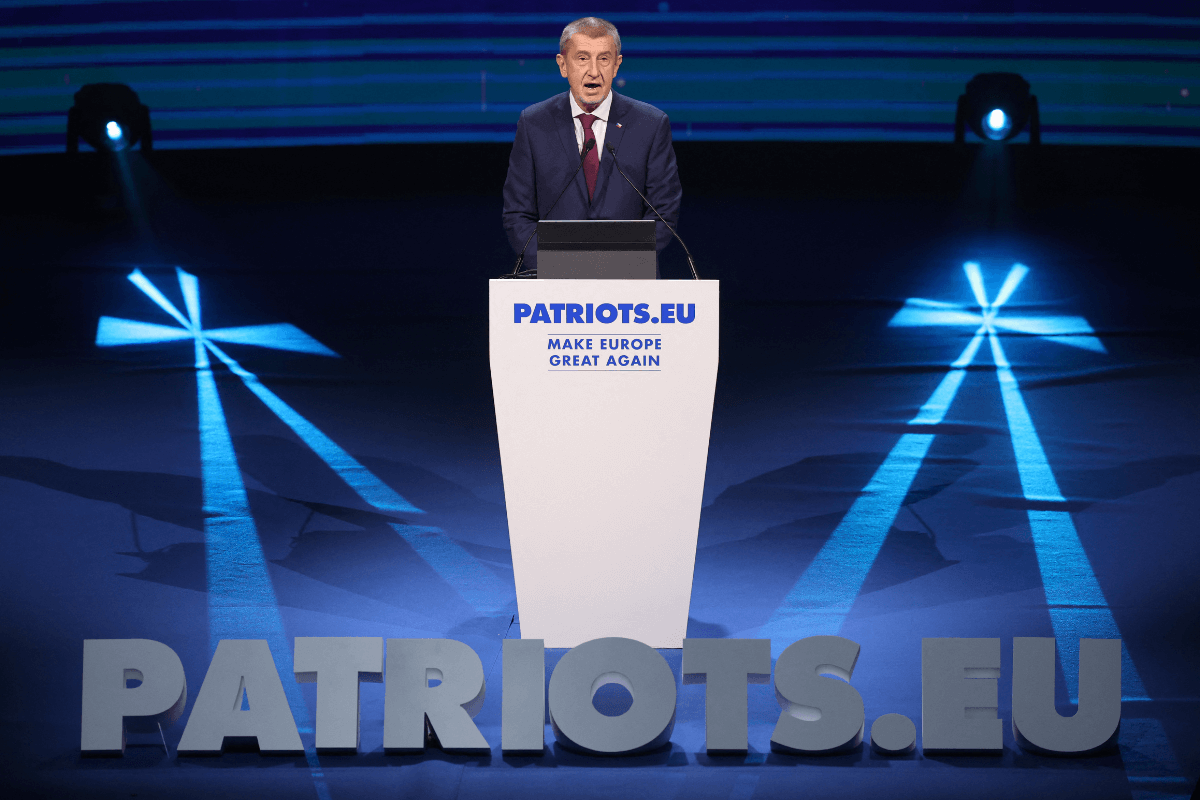

Czechia’s elections mark a decisive turn for the Visegrád Four. With Andrej Babiš’s ANO securing victory last weekend, Prague is set to realign with Hungary and Slovakia, hardening the bloc into an illiberal alliance. This risks weakening the EU’s stance on Ukraine and rule of law at a moment when unity is most needed.
ANO’s victory in the Czech elections, and its likely coalition with the far-right Freedom and Direct Democracy (SPD) party and the right-wing Motorists for Themselves, marks a turning point not only for Prague but for the EU as a whole.
The Czech result accelerates the transformation of the Visegrád Four (V4) – once made up of staunchly pro-Western, Russia-sceptical states – into a bloc dominated by illiberal populists. With Hungary’s Viktor Orbán and Slovakia’s Robert Fico already obstructing consensus in Brussels, Babiš’s return adds another disruptive leader to the European Council. The implications could paralyse EU decisions on sanctions, Ukraine, migration and budget allocations at a critical moment for Europe’s security.
Domestic dynamics
While anti-system parties have made up around one fifth of Czech voters since the 1990s, the 2025 elections mark a shift in political acceptability and a favourable geopolitical climate for authoritarian and illiberal forces. The collapse of the centre-right SPOLU (Together) coalition led by Prime Minister Petr Fiala reflects declining trust after unpopular reforms and a worsening cost-of-living crisis. Babiš’s ANO party capitalised on economic grievances, disillusionment with mainstream parties and growing fatigue with support for Ukraine to secure 34.5% of the vote and 80 seats in the 200-seat lower house. Massive disinformation campaigns amplified this mood, eroding public confidence in liberal democratic institutions.
If the anti-EU and anti-NATO SPD and other far-right forces join or prop up the government, Eurosceptic and nationalist rhetoric will be further entrenched. Coalition talks are already under way with the Motorists.
While Babiš took some pragmatic positions in his previous term, such as expelling Russian diplomats after a Russian-perpetrated explosion in an ammunition depot, his party’s founding role in the far-right Patriots for Europe group in the European Parliament ties him firmly to Orbán’s camp. This signals a decisive shift away from centrist pragmatism towards Europe’s illiberal right.
Geopolitical implications: V4 and Ukraine
The V4 is undergoing a profound transformation. Hungary remains entrenched in its pro-Russian and illiberal stance, while Slovakia under Robert Fico openly challenges EU positions on sanctions and Ukraine. Poland, where Prime Minister Donald Tusk’s pro-EU government is constrained by President Karol Nawrocki’s veto power and falling public approval, now finds itself increasingly isolated.
With Czechia moving closer to the Orbán-Fico camp, the V4 risks hardening into an illiberal bloc inside the Union. During the campaign, Babiš echoed Orbán and Fico with rhetoric steeped in Euroscepticism, nationalism and criticism of Brussels. His first term as prime minister was already marred by EU investigations into the misuse of subsidies and conflicts of interest linked to his Agrofert conglomerate.
The implications for Ukraine are immediate. Czechia, once a frontrunner in supplying arms and a vocal supporter of Kyiv, may now reduce its commitment, weakening EU’s consensus. In July, Babiš said he would scrap the Prague-led ammunition initiative to support Ukraine if he returned to power, undermining cohesion at a time of mounting external threats.
EU-level consequences
Unlike an isolated member state, the V4 has long operated as a regional coordination platform. A cohesive illiberal V4 can obstruct consensus more effectively.
In the European Parliament, Babiš’s victory strengthens the far-right Patriots for Europe group, increasing the weight of nationalist and radical forces in EU decision-making. In the European Council, Babiš could now join Orbán in obstructing Ukraine aid packages, enforcement of rule-of-law conditionality for EU funds and agreement on the migration pact and climate measures.
Beyond immediate policy blocks, the deeper risk is the normalisation of illiberalism within EU institutions. With his record of corruption scandals and media concentration efforts, Babiš’s return to power lowers the bar for what is tolerated inside the Union’s mainstream.
With parliamentary elections in Hungary set for April 2026 and Poland for 2027, the Visegrád Four’s trajectory remains uncertain. If Viktor Orbán stays in power and Poland swings back towards an illiberal course, the EU could soon face an entrenched axis of obstruction from within – one that would complicate its ability to respond to crises and maintain credibility as a community of values.
Safeguarding European credibility and resilience will require stronger coalitions among pro-European member states and tighter rule-of-law enforcement tools – from conditionality on EU funds to the proposed European Democracy Shield – to ensure democratic backsliding is not normalised within the EU itself.
Tabea Schaumann is a Junior Policy Analyst in the Executive Office of the European Policy Centre.
The support the European Policy Centre receives for its ongoing operations, or specifically for its publications, does not constitute an endorsement of their contents, which reflect the views of the authors only. Supporters and partners cannot be held responsible for any use that may be made of the information contained therein.