

Trump’s migration speech at UN should not go unanswered
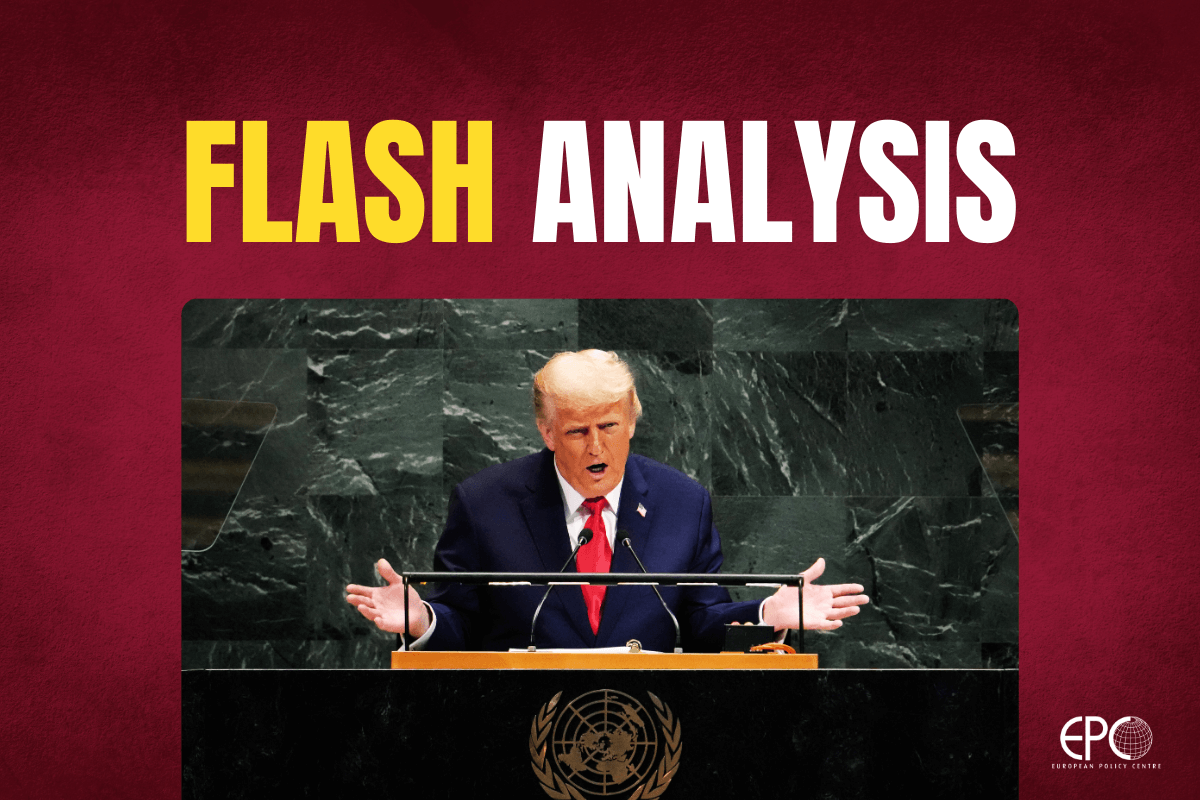

Donald Trump’s speech at the UN’s 80th General Assembly reaffirmed two things: his disdain for multilateralism and his view of Europe as weak, constrained by its rules-based order. His remarks were riddled with falsehoods: claims of “open borders,” “uncontrolled migration,” and even London being governed under Sharia law. Such rhetoric and criticism against the rule of law is unsurprising given that many of his own immigration policies have been blocked by US courts. But while selective and inflammatory, some of his assertions merit closer attention.
For the EU, ignoring them risks tacit acceptance and a missed opportunity. Implementing long overdue migration and asylum reforms that address political, social, and economic concerns could help rebuild trust in the EU and democratic resilience. Partnerships based on shared goals would also offer an attractive alternative to Trump’s transactional approach.
Trump’s claim about the “failed experiment of open borders” recalls the 2015–16 arrival of hundreds of thousands of asylum-seekers, mostly from Syria. Though inaccurate, it highlights a divisive, unresolved issue: the preservation of free movement within Schengen. Internal border controls, limits to intra-EU mobility, and weak external border management continue to hinder what should be defended as a core European strength. Unless leaders confront these concerns directly, they leave space for the far right to promote visions of “Fortress Europe.”
Contrary to Trump’s portrayal, legal entries into the EU still far outweigh spontaneous arrivals. Irregular crossings fell in 2024 and so far in 2025, while asylum applications have steadily declined since October 2023. Yet public perception remains one of governments “losing control.” Left unaddressed, this gap risks severe political consequences. The solution is not merely reducing numbers but ensuring greater predictability and fairness. Policymakers should adapt legal migration channels to meet real needs while preserving asylum for those fleeing persecution.
Trump’s attack on a supposed “Globalist Migration Agenda” also dismissed the value of shared global migration governance. In reality, US aid cuts have already reduced capacity to respond to the needs of people on the move. Meanwhile, EU efforts to shift asylum or return responsibilities to non-EU countries echo Trump’s transactionalism. Unlike countries that might bow to US pressure for fear of tariffs or visa restrictions, Europe should not cede ground. If designed around partnership and mutual interests, EU migration diplomacy could strengthen ties with countries of origin and transit, help stabilise Europe’s neighbourhood, and ensure funding is linked to rule of law compliance.
Europe must resist Trump’s distortions not only with facts but with credible reforms and principled engagement.
Helena Hahn is a policy analyst at the European Policy Centre.
The support the European Policy Centre receives for its ongoing operations, or specifically for its publications, does not constitute an endorsement of their contents, which reflect the views of the authors only. Supporters and partners cannot be held responsible for any use that may be made of the information contained therein.