

Unlocking Bosnia and Herzegovina’s EU accession path
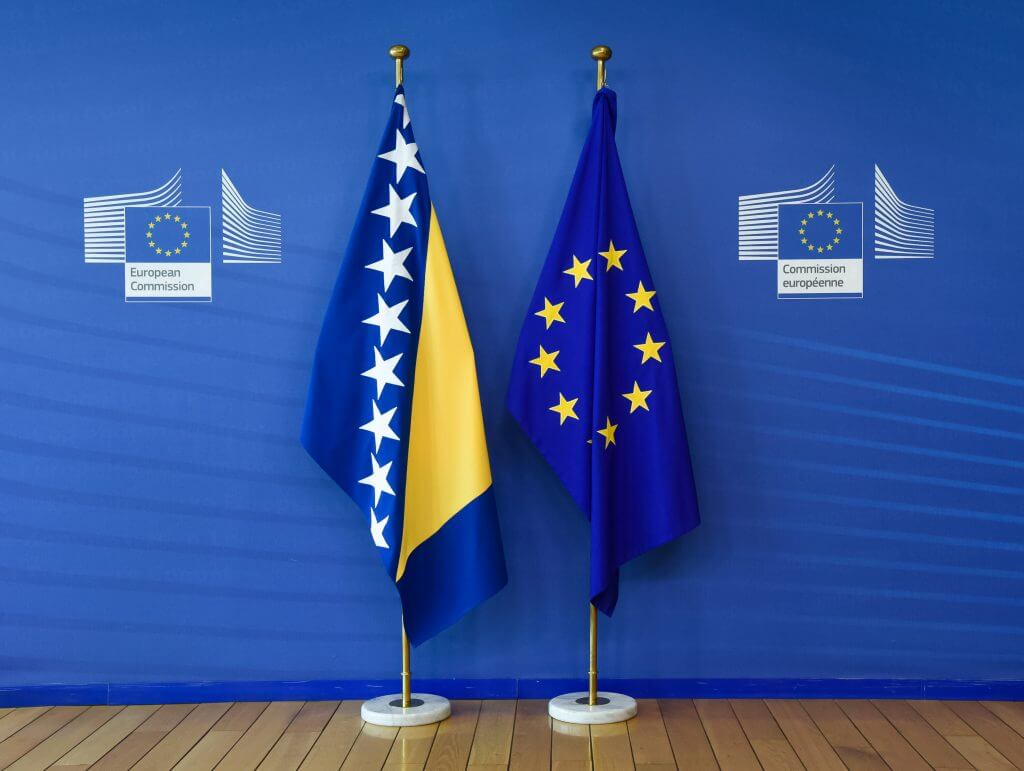

The EU framed Bosnia’s accession process as a vehicle for post-war state-building, assuming that the prospect of membership would provide sufficient incentives to drive reform. More than two decades later, the anticipated transformation remains incomplete and the country’s accession path is stalled.
This stagnation is the result of a combination of factors: the EU’s inconsistent application of conditionality and misleading communications, the EU’s enlargement hesitation and the consequent erosion of the credibility of the membership perspective, the state capture and instrumentalisation of the accession process by domestic elites, and the exclusion of civil society and citizens from reform processes.
Although 2022 brought renewed momentum for enlargement and led to steps forward for Bosnia and Herzegovina – including candidate status and the green light to open accession talks – these developments resulted primarily from EU political impetus rather than sustained domestic reform performance.
Since the Council’s decision to open accession negotiations, Bosnia and Herzegovina’s EU trajectory has again stalled. In Brussels, attention is focused on the frontrunners – Montenegro, which aims to close negotiations by the end of 2026, and on Ukraine, whose membership the EU is trying to make viable – while the laggards remain largely out of focus.
To avoid enlargement becoming a band-aid fix, with only a few new members joining in the coming years, the EU must keep the prospect of accession alive to those further from meeting the criteria, including Bosnia and Herzegovina. While responsibility for reforms lies with domestic political leaders, the EU can – and should – deploy its leverage more efficiently.
Restoring the EU’s credibility and transformative power will require adherence to six core principles: predictable conditionality, quality-based assessment, transparent political choices, broader societal ownership, renewed debate of constitutional reform and fair delivery.
Read the full Policy Brief here.
Berta López Domènech is a Policy Analyst in the European Politics and Institutions Programme at the European Policy Centre.
The support the European Policy Centre receives for its ongoing operations, or specifically for its publications, does not constitute an endorsement of their contents, which reflect the views of the authors only. Supporters and partners cannot be held responsible for any use that may be made of the information contained therein.