

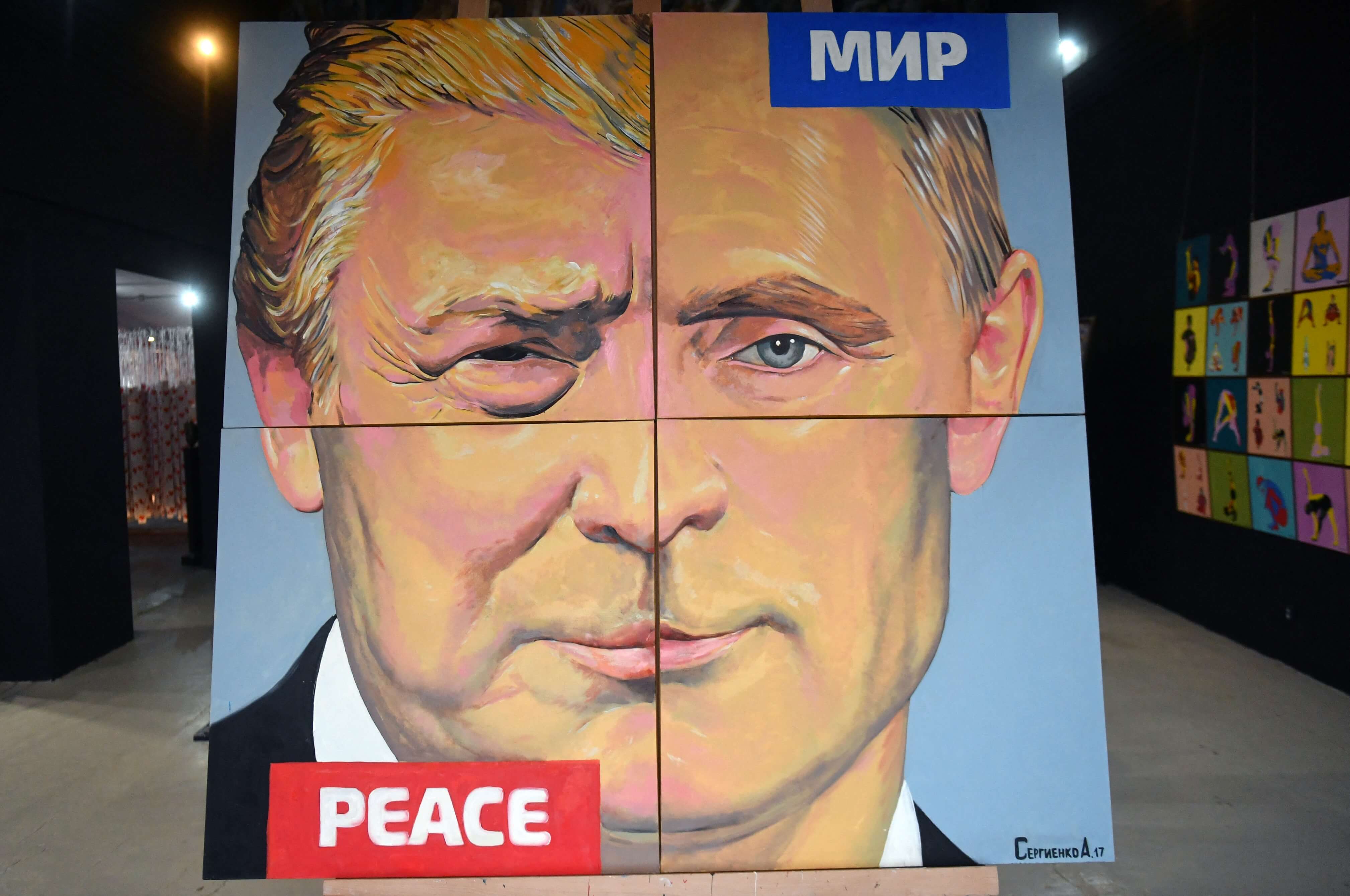

Ahead of his meeting with Russian President Vladimir Putin on 15 August, US President Donald Trump must stop acting like a Russian asset if he is to stand any chance of winning his longed-for Nobel Peace Prize. Unless Putin declares that he is ready to accept an unconditional ceasefire, Trump must spell out what the consequences of continued Russian aggression will be. There must be no agreement that rewards and encourages Russian aggression. Meanwhile, Europeans must ready themselves to pick up the baton if Trump decides to quit the peace process rather than pressure Putin.
Putin thinks he can play Trump
This week may mark a decisive turning point in Russia’s three-and-a-half-year war of aggression against Ukraine. Russian President Vladimir Putin will attempt to use the upcoming Alaska summit to manipulate US President Donald Trump and divide the US from Europe, rather than engage in meaningful peace efforts. While nothing can be decided about Ukraine without Ukraine, Ukrainian President Volodimir Zelenskyy is not expected to be in the room. Nor will any European leader. This suits Putin, as he wants a tete-à-tete with Trump, who frequently praises the Russian president and is so eager to “make a deal” with him that there is a huge risk of him doing something foolish—further enabling Putin’s imperialistic ambitions in Ukraine and potentially elsewhere. Ever since Trump returned to office, Putin has been playing him. He has been effectively baiting Trump, claiming that he wants peace and an end to the war he started in Ukraine. Yet, for every olive branch Putin has offered, he has subsequently continued to bomb Ukrainian civilians and delayed or deflected real efforts at achieving peace.
Still, as civilian deaths mounted, Trump seemed to finally grasp that Putin might not want to end the war after all—that Putin was “tapping him along,” as he put it. He subsequently changed track and began enabling more significant transfers of weaponry to Kyiv, threatening to increase pressure on Russia with sanctions, applying tariffs on India for buying Russian oil, and declaring further deadlines for action. Yet Trump has made yet another U-turn. Following the meeting between Putin and Trump's Special Envoy, Steve Whitkof, on 6 August—two days before Trump’s ceasefire-or-sanctions deadline—Trump agreed to meet Putin, letting the deadline pass without consequences. This sort of inconsistency undermines the effectiveness of US policy and leverage and sends mixed signals to allies and adversaries alike.
This is a big win for Putin, who will arrive in the US after over three years of international isolation; his last visit to the US was to meet George W Bush in 2007. Putin will come to the Alaska Summit fully prepared, his KGB skills honed to manipulate Trump and take advantage of his weaknesses. Putin will aim to sideline Ukraine and potentially gain concessions in line with his aims since the beginning of his full-scale invasion. He will also use the gathering to divide the US from Europe. Given that Trump believes that he can talk to Putin as a partner rather than an adversary, Putin will go into the meeting confident that he can manipulate Trump.
Putin will demand maximum concessions because the Kremlin believes that the West always gives you something if you act in an intransigent fashion for long enough. This is reflected in Putin’s maximalist peace memorandum, which demands that Ukraine completely withdraw from the four Ukrainian provinces that Moscow claims as its own but has so far been unable to fully occupy—Donetsk, Luhansk, Zaporizhzhia, and Kherson. Russia also fully occupies Crimea and small parts of the Sumy and Kharkiv regions.
This is a red line for Ukraine. Beyond the fact that borders should not be changed by force (as enshrined in the UN Charter), this would mean abandoning dozens of towns and cities, along with millions of Ukrainians to the horrors of indefinite Russian occupation and unconscionable war crimes. Russia’s policy of erasing Ukrainian identity by indoctrinating, re-educating, and brainwashing the population of the occupied territories is already well documented. Furthermore, it would also dramatically weaken Ukraine’s defences and leave the rest of the country dangerously exposed to further Russian aggression.
While Putin wants “negotiations”, he does not want an end to the war now. He continues to believe that he can achieve a military victory and is committed to his original aims—namely, to gain effective political control of the country and destroy Ukrainian identity. That Russia has made important territorial gains in the last three months will further embolden Putin. Still, while Putin does not plan to make any major concessions, to curry favour with Trump he may agree to stop air strikes on Ukrainian towns, hospitals, energy infrastructure, etc. Russia has also offered a land swap—in return for Ukraine removing its forces from Donetsk and Luhansk, Russia could remove its troops from Sumy and Kharkiv – something unacceptable for Ukraine and also illegal under the constitution.
What should Trump do?
First, Trump needs to go to the meeting properly prepared—because Putin will be. Trump needs to dampen his tendency towards freewheeling and have a clear set of points and demands that he should stick to. Those European leaders who are closest to Trump must continue until the last minute to coordinate and engage with him to ensure that, when he goes to Alaska, everyone is fully aligned. They should also continue to push for Zelenskyy’s participation.
Trump should listen to what Putin has to say—but not commit to anything. Trump does not represent Ukraine. It is not his country that is being ripped apart, its people killed, and its children stolen. At this point, Trump is looking for a ceasefire rather than a final peace agreement; he should insist that the next step in the process will be a trilateral meeting between himself, Zelenskyy, and Putin, along with Europe. Trump should also make it clear that the return of all of Ukraine’s stolen children is a prerequisite to any peace deal.
Trump is the president of the most powerful country in the world. He should act and speak from a position of strength. He should leave no doubt that he will move ahead with new sanctions, including secondary sanctions, if Russia does not immediately end its bombardment of Ukraine’s towns and agree to an unconditional ceasefire. This is what Trump has been saying for the last few weeks, and he should stick to it. This would probably come as a shock to Putin, who is likely expecting Trump to fold. Putin wants a deal with Trump that will be presented to Kyiv and other European capitals as a fait accompli. Yet, Putin also understands that keeping communication open with Trump is crucial, lest his frustrations with Moscow lead to real consequences.
Europeans must prepare for the worst
Europeans will be hoping that Trump does not fold and walk away. But there is a real chance this will happen, and that subsequently he will revert to blaming Ukraine for the continuation of the war, potentially halting what is left of US support. In this case, Europeans need to step up and take over the leadership role and heavy lifting from Washington—something they have been reluctant to do but are nevertheless persevering with. The creation of the Coalition of the Willing has been an important development, demonstrating to Washington European unity and commitment to supporting Ukraine, including a readiness to take the lead on security guarantees for Ukraine and the monitoring of a future ceasefire. Recent initiatives ahead of the Summit, including meetings with Trump and Vice President JD Vance to align and communicate positions are also important.
Trump's reluctance to provide military support to Ukraine already led European leaders to reaffirm their commitment to supporting Kyiv, as well as to take important steps to start boosting their own security and defence. At the 2025 NATO Summit, European NATO members agreed to start buying weapons for Ukraine from the US, and there is no reason why Trump should halt this agreement, given it puts money directly into the US defence industry. However, with the US finalising its defence posture and strategy review, the potential withdrawal of tens of thousands of US troops from Europe is likely, which could further embolden Putin. Thus, Europeans need to have a clear plan of action ready. This should include how to fill the gap left by US forces, ensuring that any further ceasefire has a robust monitoring system along with robust security guarantees for Ukraine—something they have so far failed to conceptualise. In addition, a vision for a coherent negotiation framework for Ukraine is crucial in the event that the US-led process collapses. Furthermore, the success of any future peace agreement relies on a credible and sustained commitment to deterring Russian aggression in Europe, and Europe must be able to underwrite its own security. This starts with Ukraine, and there is no more time to waste.
Amanda Paul is Deputy Head of the Europe in the World Programme and Senior Policy Analyst at the European Policy Centre.
The support the European Policy Centre receives for its ongoing operations, or specifically for its publications, does not constitute an endorsement of their contents, which reflect the views of the authors only. Supporters and partners cannot be held responsible for any use that may be made of the information contained therein.