

Armenia votes West, but cannot quit Russia
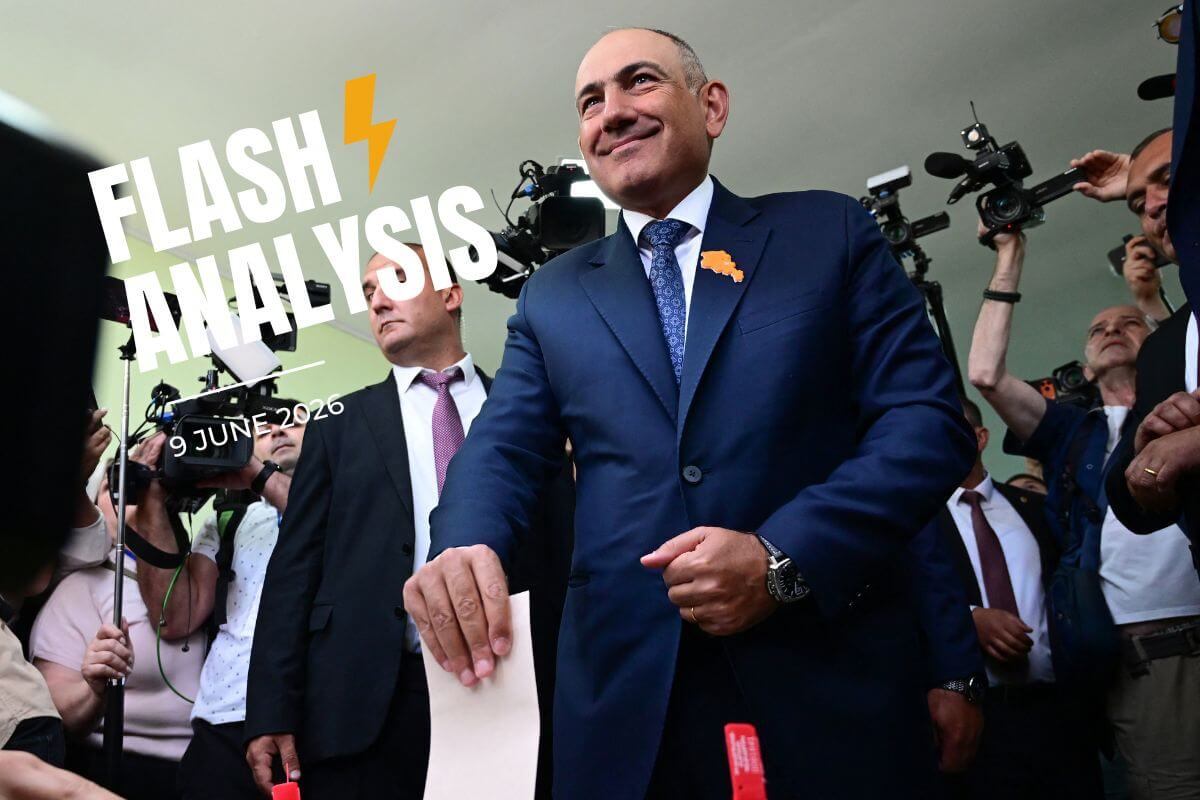

On 7 June 2026, Prime Minister Nikol Pashinyan’s Civil Contract party won just under 50% of the vote in Armenia’s parliamentary elections. While this gives Pashinyan a parliamentary majority, it falls short of the constitutional majority needed to call a referendum on amending the constitution, including removing references that Azerbaijan says imply territorial claims to Nagorno-Karabakh — Azerbaijan's condition for signing a peace treaty.
The election was effectively a referendum on Pashinyan’s post-war vision. Since Armenia’s defeat in the 2020 war with Azerbaijan and the loss of Nagorno-Karabakh in 2023, Pashinyan has argued that Armenia’s long-term security and prosperity depend on three interconnected goals: normalising relations with Azerbaijan and Türkiye, reducing overreliance on Russia, and deepening ties with the EU, the US and partners in the Global South. Voters were therefore choosing not only a government, but Armenia’s strategic direction.
The outcome is a major geopolitical setback for Russia. Moscow used a variety of foreign information manipulation tactics and placed an embargo on a number of Armenian goods to push voters to candidate Samvel Karapetyan. Together with Belarus, Kazakhstan and Kyrgyzstan, Russia also warned that Armenia could lose trade benefits offered by the Eurasian Economic Union or even face a “Ukraine scenario” if it continued to pursue closer ties with the EU.
Yet Armenia is neither seeking nor able to sever ties with Moscow. Moscow remains an important economic partner, a major destination for Armenian workers and an influential regional actor. Geography alone ensures that Russia will remain central to Armenia's strategic calculations. It is therefore no surprise that one of Pashinyan’s first moves after the election was to signal continued engagement with Moscow
The significance of Pashinyan’s victory lies instead in its endorsement of a more diversified foreign policy. Yerevan is seeking greater strategic flexibility while maintaining pragmatic relations with Moscow. A priority will be to finalise a peace agreement with Azerbaijan and fully open the Türkiye-Armenia border. However, having failed to secure the constitutional majority needed to advance constitutional amendment alone, Pashinyan will have to find support from other parties. That may prove challenging, but not impossible.
Reopening Armenia's borders with its neighbours would reduce the country's regional isolation, expand trade and transit links, and strengthen its role in emerging East-West connectivity corridors, including the Trump Route for International Peace and Prosperity (TRIPP). In many ways, this regional normalisation agenda is the foundation upon which Armenia’s broader diversification strategy rests.
Strengthening ties with the EU will be an equally important part of this effort. The EU has become an increasingly significant partner for Armenia in areas ranging from governance reform and economic development to border monitoring and resilience against Russian pressure and disinformation. Ahead of the election, Brussels announced an initial €50 million support package to help Armenia weather potential economic coercion and pledged deeper cooperation.
For Yerevan, closer engagement with the EU offers not only investment and regulatory modernisation, but also access to larger markets and support for one of Armenia’s key foreign policy priorities: visa liberalisation with the EU. Together, these benefits could provide a stronger anchor for the country’s long-term economic transformation and stability.
Amanda Paul is Deputy Head of the Europe in the World Programme and Senior Policy Analyst.
The support the European Policy Centre receives for its ongoing operations, or specifically for its publications, does not constitute an endorsement of their contents, which reflect the views of the authors only. Supporters and partners cannot be held responsible for any use that may be made of the information contained therein.