

Why Ukraine will not – and should not – give up the Donbas or any other territory
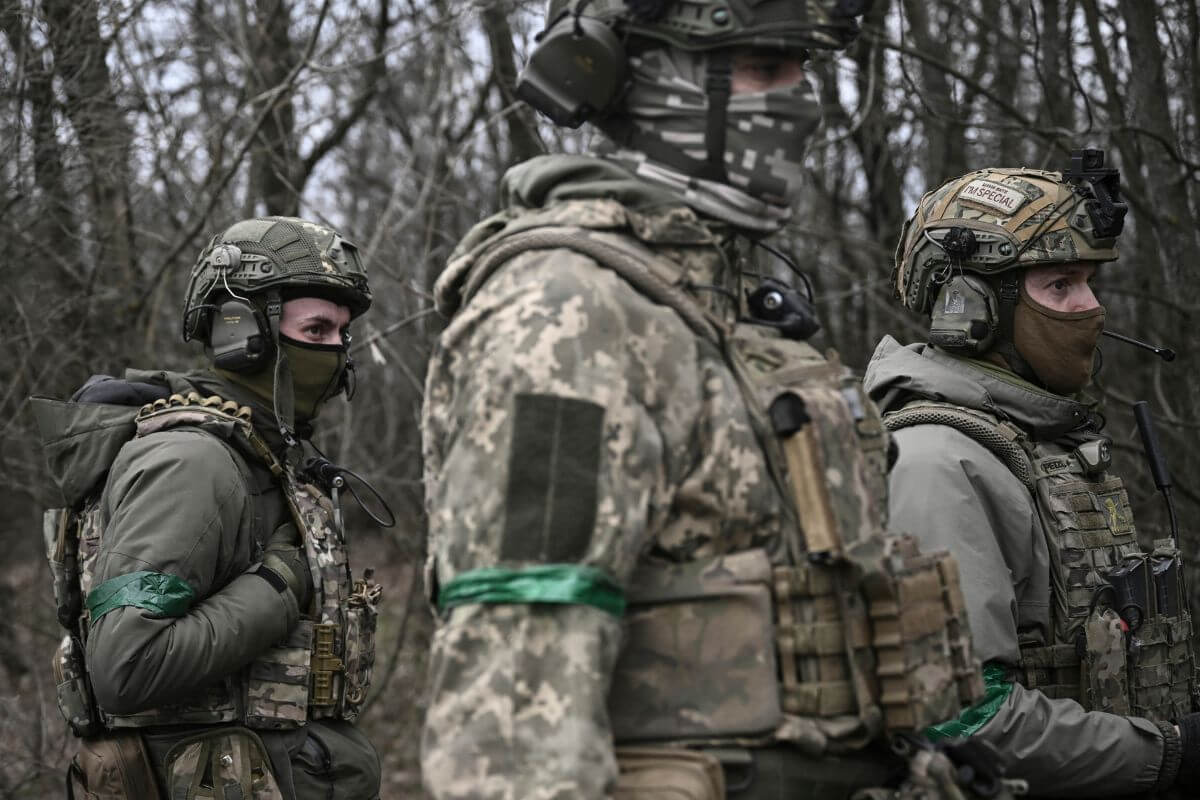

Twelve years after Russia’s illegal annexation of Crimea, the lesson is clear: accepting or recognising Russian control over the Donbas and other Ukrainian territories is not a pathway to peace. It would legitimise aggression, invite more war and abandon millions of Ukrainians to systematic repression and ethnic cleansing.
Appeasing Russia is not the answer
More than four years into Russia’s full-scale invasion, Moscow has still failed to fully seize the Donbas. It occupies almost all of Luhansk and around three-quarters of Donetsk, while Ukraine retains control over around 10–15 %, around key fortified cities such as Sloviansk and Kramatorsk. These positions anchor Ukraine’s eastern defence and constrain Russian maneuverability.
The Donbas remains the most heavily contested and fortified theatre of the war. Since 2014, Ukraine has built layered defensive systems, including trench networks, hardened positions and minefields, designed to absorb and exhaust Russian assaults. These defences have forced Russia into costly attritional tactics, yielding minimal territorial gains with significant human and material cost. Control of the Donbas is therefore strategic: it anchors Ukraine’s eastern defence while tying down Russian resources.
Calls within US-led negotiations for Ukraine to concede territory in exchange for ‘peace’ persist, with President Donald Trump pressing Kyiv to compromise its territory rather than increasing pressure on Russia. This reflects a dangerous “might makes right” logic and the illusion that concessions will end the war. European partners oppose this strategy but have yet to secure an effective role in shaping negotiations.
Forcing Ukraine to relinquish the Donbas would dismantle its defensive shield, which together with the army, broader society considers an internal security guarantee. Rather than de-escalate the conflict, it would provide Russia with fortified ground, logistics hubs and forward operating depth, enabling it to regroup and prepare further offensives from a dramatically stronger position. A Russia that gains territory through coercion will use any pause not to reconcile, but to rearm.
It also violates a core principle of international law: borders cannot be changed by force. If conquest succeeds in Ukraine, other revisionist powers will conclude that war pays. Framing the Donbas as a bargaining chip also ignores the lived experience of Russian occupation. It treats territory as a bargaining chip while ignoring the people who live there.
 SERGEI SUPINSKY / AFP
The Kremlin’s occupation playbook
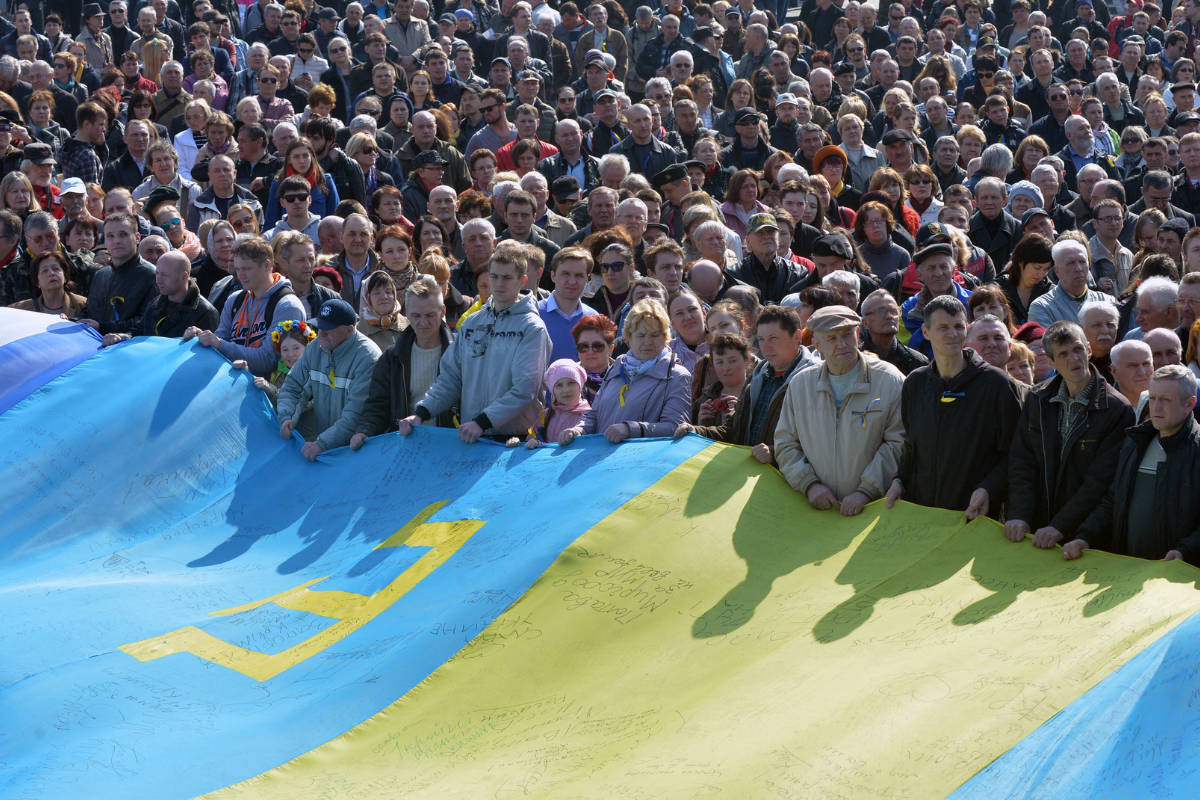
Millions of Ukrainians live under Russian occupation across parts of Kherson, Zaporizhzhia, Kharkiv, Sumy and Dnipropetrovsk, along with the areas of the Donbas and Crimea. Their experience of Russian rule offers a clear indication of what further territorial concessions would entail.
Human rights organisations have documented widespread abuses in Ukraine’s temporarily occupied territories, including mass repression, forced deportations, filtration camps, torture, disappearances and the systematic eradication of Ukrainian language and culture. The Kremlin is implementing a comprehensive campaign to erase Ukrainian statehood and identity – an ethnic cleansing in plain sight.
Russia’s coercive ‘passportisation’ policies deny access to employment, mortgages, home ownership, school enrollment and healthcare – including to critical medicine and other basic services – to anyone not holding Russian papers. Residents are also forcibly conscripted into the occupying Russian military, which is a war crime.
Education systems now impose the Russian curriculum, while Ukrainian language instruction has been banned. Tens of thousands of children have been deported to Russia or subjected to so-called ‘re-education’ programmes, including via ‘summer’ or ‘holiday’ camps. Disinformation is widespread on Telegram and other social media communities, which have become powerful tools to foster loyalty to Russia.
This pattern mirrors the ongoing situation in Crimea since 2014. Political freedoms have been curtailed, with the peninsula rapidly becoming a black hole for human rights and ethnic cleansing. The persecution of minorities, particularly Crimean Tatars and ethnic Ukrainians, and the repression of dissident voices have become the norm. Independent media has been shuttered, and pro-Ukrainian activists have been driven into exile or silenced. The peninsula has also been transformed into a massive military base from which Russia launched its war on Ukraine – and continues to undermine security across the entire Black Sea region. Ceding the Donbas would repeat the same error.
Facing facts
Territorial concessions do not bring lasting peace. They create temporary, unstable ceasefire lines which Russia transforms into militarised enclaves to exploit in future escalation.
There is also a question of democratic legitimacy. Ukrainians have endured extraordinary hardship since the start of the war, yet public opinion repeatedly shows strong resistance to trading land for so-called peace. This reflects a widely shared understanding that surrendering territory under military pressure would reward aggression and leave Ukraine permanently vulnerable. Pressuring Ukraine to hand over land undermines its sovereignty and agency.
Wars do not end simply because one side seeks peace. They end when aggression fails. Peace without justice and security is an illusion. When Russia’s annexation of Crimea and invasion of Eastern Ukraine in 2014 was rewarded with limited consequences – it returned stronger. Rewarding further territory would only embolden an even more dangerous aggressor.
The territory that Ukraine has retaken in recent days demonstrates that Ukraine is still very much in this fight. The outcome of this war remains open. How it ends will shape Europe’s security order for decades. Ukraine’s partners must therefore sustain military and economic support while maintaining unwavering pressure on Russia. The alternative would be equivalent to rewarding an invasion – and inviting the next.
Amanda Paul is Deputy Head of the Europe in the World Programme and Senior Policy Analyst.
The support the European Policy Centre receives for its ongoing operations, or specifically for its publications, does not constitute an endorsement of their contents, which reflect the views of the authors only. Supporters and partners cannot be held responsible for any use that may be made of the information contained therein.