



Recent Russian drone incursions into Poland, Romania and the Baltic states highlight Europe’s most pressing gap: the limited ability to intercept large swarms of drones at once. What was a war-gaming scenario only a year ago has become routine, with airports forced to halt traffic, air forces scrambling jets and costly interceptors expended against disposable drones. The imbalance is glaring: Europe is burning millions of euros to defeat threats built for just thousands.
When Commission President Ursula von der Leyen spoke of building a “drone wall” on the eastern flank, she gave fresh urgency to addressing one of Europe’s growing vulnerabilities. Israel’s Iron Dome, which intercepts thousands of rockets with high success, has become a model for some in Europe facing Russia’s drone and missile barrages. But unlike Israel’s narrow focus on low-cost rockets, Europe must confront far more demanding threats: simultaneous, multi-domain assaults mixing cheap drones with hypersonic missiles aimed at its population centres and vital functions.
The Iron Dome works because it suits Israel’s unique conditions – a small territory with a concentrated population and a single main threat of short-range rockets. It also receives significant US funding. Europe’s situation is far more complex. Russia fields Iskander ballistic missiles, Kalibr and Kh-101 cruise missiles, long-range UAVs and hypersonic weapons designed to overwhelm defences. Geography compounds the challenge: Europe’s vast borders and dispersed urban and industrial centres complicate coverage.
As the war in Ukraine has shown, the challenge lies not only in the sophistication Russian weapons but in their saturation. Low-cost drones and loitering munitions are launched in swarms, exhausting defences and opening gaps for larger, more destructive strikes.
Europe’s path to credible air and missile defence remains obstructed by structural and political hurdles. The scale of the task is daunting. Dozens of interceptor batteries are needed, with stockpiles that carry eye-watering price tags. Yet costs are only part of the challenge.
Europe’s defence industry is fragmented: Berlin backs IRIS-T and Patriot, Paris and Rome promote SAMP/T, and Oslo pushes for NASAMS. Each government is reluctant to surrender its own “champion,” making common procurement and integration unnecessarily difficult.
Finally, Europe faces a procurement dilemma. Reliance on US or Israeli systems can close gaps quickly but risks undercutting Europe’s defence-industrial autonomy – a trade-off between speed and sovereignty.” The Defence Readiness Roadmap 2030 offers a way forward. By designating air and missile defence and drone/counter-drone capabilities as priority areas and launching flagships such as the European Drone Wall and Air Defence Shield, the EU aims to pool resources and close gaps collectively.
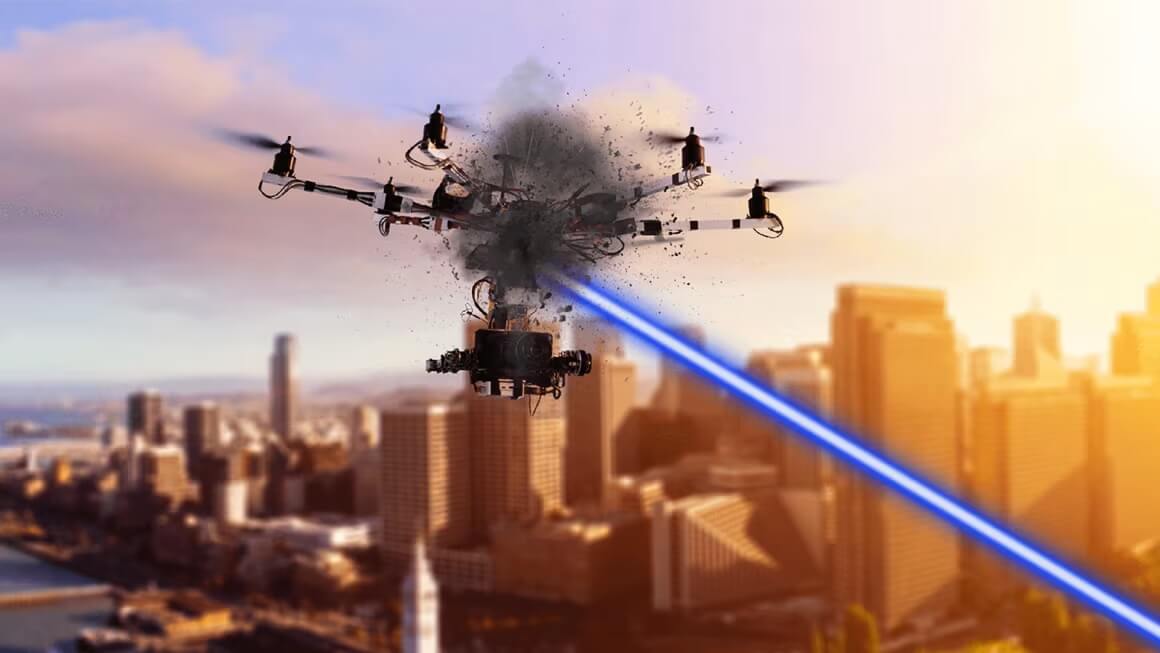
Europe needs a layered defence architecture, not a single system. At lower altitudes, this means countering drones, loitering munitions and rockets with jammers, anti-drone guns and directed-energy weapons like lasers and microwaves – where Europe has an edge over Russia. For medium-range threats such as cruise missiles, UAVs and helicopters, IRIS-T SLM and NASAMS will be central, with new laser interceptors reducing per-shot costs. Fighter aircraft and air-to-air missiles remain essential to intercept Russian cruise missiles that slip through ground-based defences.
Against ballistic and hypersonic missiles, Europe must rely on Patriot PAC-3 and SAMP/T New Generation, potentially augmented by longer range US THAAD or future European designs. These must plug into NATO’s Integrated Air and Missile Defence (IAMD). The flagship Drone Wall and Air Defence Shield programs are intended as pan-European contributions, not competitors, to NATO’s framework.
Europe’s air defence environment demands urgency, but also realism. An Iron Dome for Europe is neither technically feasible nor strategically appropriate. What Europe needs is a layered shield that matches its geography, integrates national capabilities and plugs seamlessly into NATO’s IAMD while drawing strength from EU-wide initiatives.
For the shield to be credible, Berlin, Paris and Rome must improve alignment of programmes under the ESSI to avoid duplication in joint acquisition. Europe must invest where it can lead – in missile development for high-altitude threats, directed-energy systems and scalable jammers to defeat drone swarms – and create a system in which the cheapest adequate system fires first.
Europe is already moving in this direction through the Drone Alliance with Ukraine, backed by €6 billion in EU credit, which links procurement directly to Ukraine’s defence industry. This ensures equipment is acquired for Ukraine, with Ukraine, and from its industry, anchoring battlefield-tested innovation into Europe’s broader defence ecosystem.
Because no system can intercept every threat, resilience must be treated on par with interception. Hardening infrastructure, dispersing assets and preparing for rapid repair will determine whether European societies can withstand shocks and keep functioning if strikes succeed.
The task is daunting, but the alternative is worse. The costs, politics and timelines are complex, yet the direction is clear. Europe must move now towards a layered shield, however imperfect, rather than wait for a perfect one that never arrives.
Chris Kremidas-Courtney is a Senior Visiting Fellow at the European Policy Centre.
The support the European Policy Centre receives for its ongoing operations, or specifically for its publications, does not constitute an endorsement of their contents, which reflect the views of the authors only. Supporters and partners cannot be held responsible for any use that may be made of the information contained therein.