


Europe’s rearmament debate is a contest between two schools of thought. Generals and admirals want to buy the best as soon as they can. Politicians want the surge in defence spending to strengthen Europe’s industrial base, reduce US dependence, and give substance to strategic autonomy.
Both sides are right; that is the dilemma.
The military argument is that deterrence has a deadline based on numerous estimates of Moscow being ready to attack by 2028. You cannot deter Russia in 2028 with a weapon system that is not available until 2035. A homegrown capability that arrives after the danger window has opened only helps if Europe is able to deter Moscow in the years before it arrives. Often, that means buying from the US.
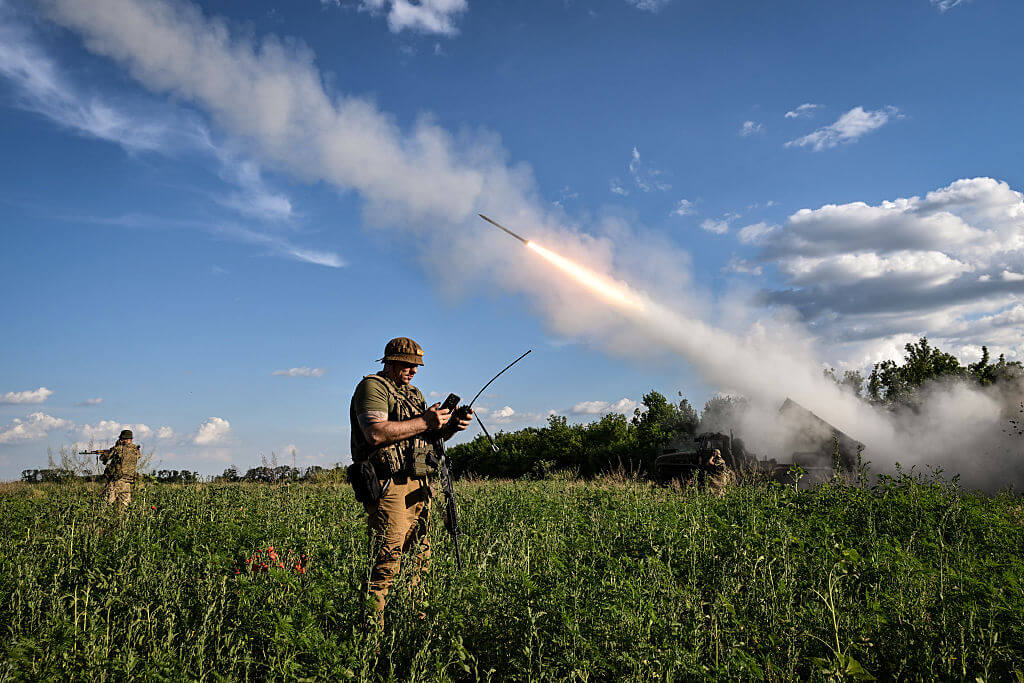
Russia is not waiting for Europe to harmonise requirements or mediate between national champions. It is reconstituting forces, scaling ammunition production, adapting, and testing Western resolve every day. If Europe is serious about deterrence, it needs air defence, long-range fires, ammunition, intelligence, logistics, mobility, counter-drone systems, and command-and-control that exist soon enough to matter.
That is why “buy the best” and “buy what fills the gaps fastest” are not calls for industrial surrender but requirements for credible deterrence. A soldier’s questions about a system are whether it works, can be delivered on time, is interoperable with NATO, can be maintained, and whether it can help prevent a war rather than be a placeholder in a future force plan.
But the politicians are not wrong either. Europe’s dependency problem is real and under Donald Trump, the United States has become a less predictable security partner. The old assumption was that if Europe bought a system from the US, it could use it. Since 2025, this can no longer be assumed. US-made weapons may still be the best immediately available option in many categories, but their reliability in a crisis can no longer be separated from the politics of Washington.
This changes the meaning of “best.”
A weapon is not only a platform. It’s also software updates, spare parts, munitions, maintenance, targeting support, training pipelines, and political permissions. A system can be technically excellent and strategically fragile if Europe can’t control how it’s sustained and used.
This is the uncomfortable heart of the 2026 debate. Buying American may be the fastest way to close some of Europe’s most dangerous gaps. Meanwhile, insisting on European-only solutions before they mature can leave Europe under-armed when Russia is most likely to test it.
There is no clean answer, only the right balance. Europe should buy urgently where the gap is critical. If the capability exists, works, and can be integrated quickly, it should be considered seriously, even if it is American, Korean, or otherwise non-European. The clock is ticking and the adversary gets a vote.
But emergency procurement should not turn into strategic sleepwalking. Every major purchase should be judged not only by performance and delivery date, but also the degree of European control it creates or denies. Can Europe maintain it, resupply the ammunition, repair it in wartime, and use it if Washington is being transactional?
Where Europe has credible systems available soon, it should buy European air defence, artillery, long-range missiles, ammunition, sensors, and platforms. The goal should be practical – not symbolic – sovereignty.
Where Europe must buy from external markets, it should co-produce wherever possible. Ukraine is the clearest case since their drones and missiles are already proven against Russia, are delivered in months, and increasingly are built under licence on European soil. European maintenance, munitions production, software access, sustainment, and European-controlled supply chains should be insisted upon as strategic requirements.
Germany’s rearmament captures the dilemma precisely: Berlin is rebuilding the Bundeswehr as a credible contributor to NATO deterrence, which is why it gravitates, with ruthless pragmatism, to systems that are available, interoperable, and already proven.
At the same time, it is ensuring that its spending surge does not lead to a new era of European dependency. Through joint ventures and partnerships involving Rheinmetall, KNDS, Leonardo, Airbus, Diehl, Hensoldt, MBDA, and others, Germany is also leveraging its rearmament wave to strengthen European production in air defence, missiles, ammunition, sensors, land systems, and cross-border supply chains.
The real choice was never “European later” versus “best now.” Best must now bring political reliability into the equation. By that measure, a system Europe cannot sustain, resupply, or fire on its own terms is not the best, however well it has performed in someone else’s war.
Russia is reconstituting on its own timeline, not Europe’s. The capabilities that deter Russia in 2028 are ones Europe fields in 2028, not ones with 2035 delivery dates. In the end, deterrence is not measured by what Europe aspires to, but by what Moscow fears today.
This Op-Ed was originally published by Euractiv. Read the original here.
Chris Kremidas-Courtney is a senior visiting fellow in the Europe in the World Programme.
The support the European Policy Centre receives for its ongoing operations, or specifically for its publications, does not constitute an endorsement of their contents, which reflect the views of the authors only. Supporters and partners cannot be held responsible for any use that may be made of the information contained therein.