

Andrew Puzder: Europe must adapt as US shifts to Asia
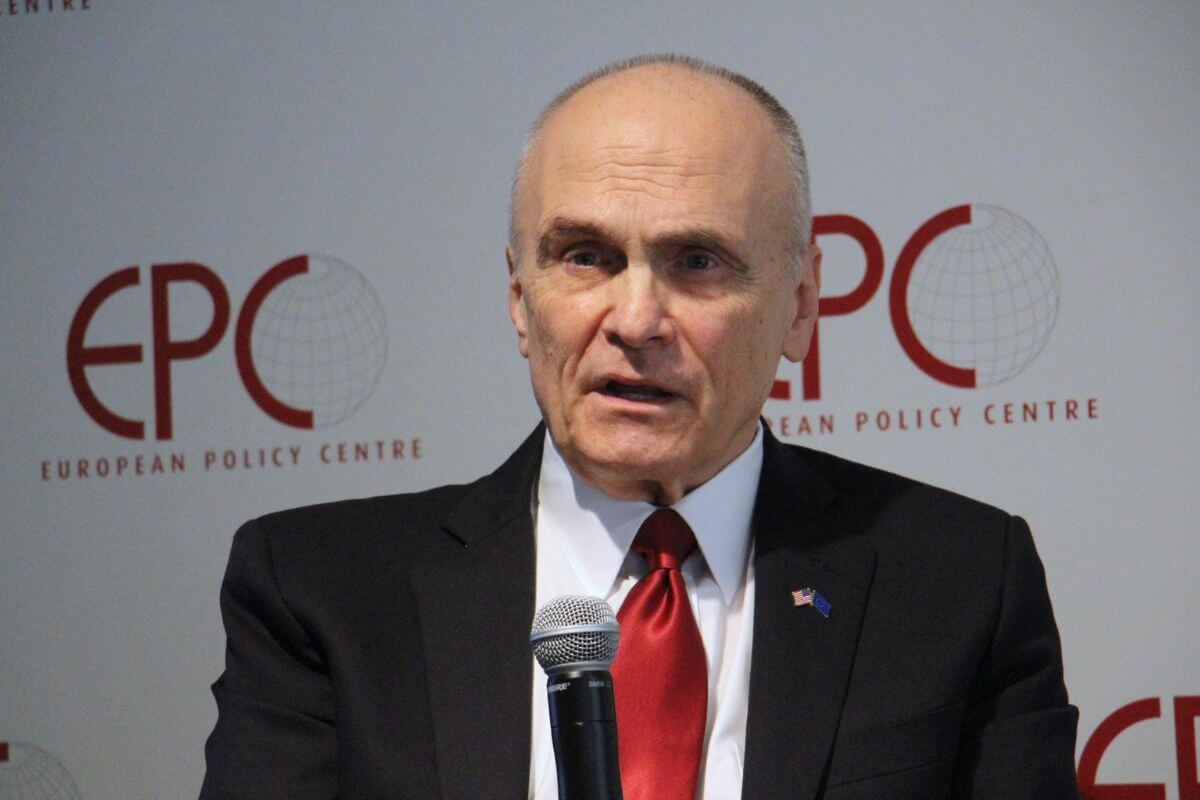
One day after the European Parliament’s approval of key elements of the EU-US trade agreement, US Ambassador to the EU Andrew Puzder spoke to the EPC as part of its “Thought Leadership” series. The ambassador assured the audience that the transatlantic relationship, despite numerous divergences, was not breaking apart. At the same time, Puzder emphasised that ties were being redefined and that Europe needs to adjust.
“With the world changing very dramatically, the US has to shift its focus towards Asia in terms of military and defence priorities,” said Puzder.
“I don’t think the depth of that change has truly hit anyone until the last few years, when we began to understand the real long-term threat posed by China,” he said. Russia, of course, remains a threat, as the war in Ukraine makes clear. But for Puzder, Beijing — with its far larger economy and population — is the more consequential player in long-term geopolitical competition.
Puzder also acknowledged that the shift in his country’s focus towards Asia was causing “some discomfort in Europe,” not least because it coincided with the collapse of three long-standing European assumptions: cheap Russian energy, a booming Chinese market, and guaranteed US defence coverage without Europe paying for more.
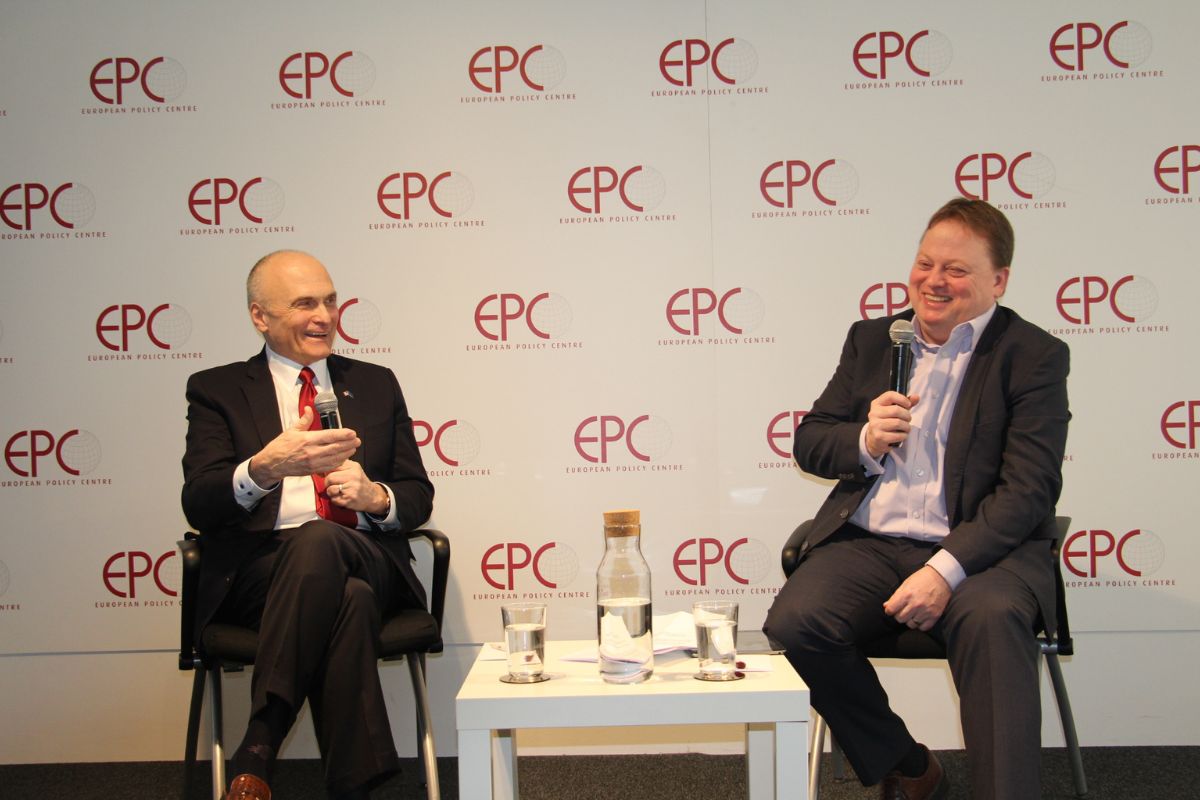
At the same time, he highlighted EU-US ties. Commenting on the controversial US National Security Strategy, which had been critical of the EU, he noted that it also makes clear that Europe remains vital to the US both culturally and economically. “I don’t think this is a ‘Europe, go away, we don’t want anything to do with you’ moment. It’s a recognition that Europe and the EU are essential to the prosperity of the US,” he said.
Puzder welcomed the European Parliament’s approval of the tariff elements of the trade agreement with the US, describing the move as “hugely important.” He described the political process of dealing with numerous amendments and the large number of MEPs, as challenging, “like herding cats.” Nonetheless, he expressed hope that an agreement will be reached by May.
In Greenland — where sharp differences emerged between the allies when Trump pushed for US ownership — Puzder said the motive was to prevent Russia and China from “stepping on America’s toes”, citing the invasion of Ukraine as an example. “They will be aggressive where they can be. The President believes they would be less aggressive if the US had a greater presence in Greenland,” he said. But he added that Denmark, Greenland, and the US were now working on an arrangement that would meet everyone’s needs.
On the Iran conflict — where European allies have been hesitant to intervene — he said Trump had acted after receiving intelligence that Iran was amassing large quantities of missiles and drones, mainly ballistic ones. Puzder added: “The purpose of building this arsenal was to support the development of a nuclear weapons programme and ultimately to acquire nuclear weapons.”
He added, “There was no political advantage in doing this. It is not something MAGA Republicans were particularly in favour of. I think he simply looked at the situation and decided he was not going to do what previous presidents had done and kick the can down the road. He decided to do the right thing — and the right thing was to stop Iran.”
With the Strait of Hormuz now blocked, sparking a possible global energy and fertiliser crisis, he said that Trump had been disappointed by the limited support for efforts to reopen it — particularly “as it was far more critical to European and Asian markets than to the US.”
On defence, Puzder warned against prioritising “made in Europe” procurement, arguing that the transatlantic defence industrial base is already deeply integrated. The F-35, he noted, is built across multiple EU member states. “We produce more, and we produce better, when we work together,” he said.
Asked how he would like to see transatlantic relations develop during his tenure, Puzder said that regulations holding back economic growth should be removed on both sides of the Atlantic. He highlighted the need to implement agreements on trade, critical minerals and PaxSilica, with the EU becoming a full partner in the AI race.
Addressing the AI race, the Ambassador highlighted five vital elements: energy, critical minerals, data centres, collected data, and access to US AI technology. Of these, he argued, Europe’s biggest vulnerability was its energy supply. Despite renewables and nuclear power, he insisted it was still not enough: “You need fossil fuels — an abundant supply, and inexpensive.”
He added that “fewer restrictions mean cheaper fossil fuels, but more restrictions mean less supply and higher prices.” He singled out the EU’s methane regulations, describing them as “a major issue.”
Puzder framed his remarks within the scope of US history, with the country celebrating its 250th anniversary this year. He referenced the principles of the Declaration of Independence and Lincoln’s Gettysburg Address as the philosophical cornerstones of the US — and of its transatlantic relationship with the West.
“Once we start moving in a more positive direction — where Europe becomes stronger economically and militarily, together with the US — the relationship will improve,” Puzder concluded.
Rajnish Singh is a Media Outreach Executive at the EPC Communications team.
The support the European Policy Centre receives for its ongoing operations, or specifically for its publications, does not constitute an endorsement of their contents, which reflect the views of the authors only. Supporters and partners cannot be held responsible for any use that may be made of the information contained therein.