

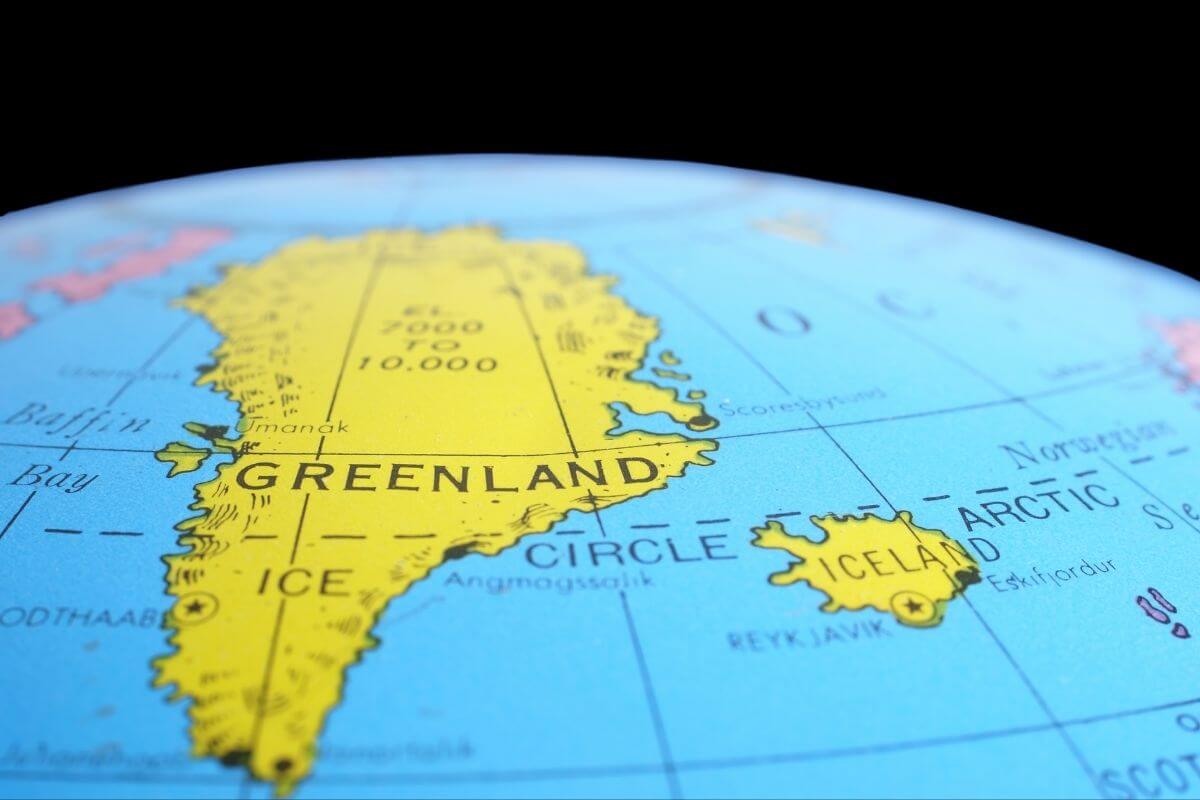


Although US President Trump’s threat to ‘take’ Greenland may appear bombastic or fantastical, it must be taken seriously. It requires a coordinated response from Greenland and Denmark, their Nordic, Arctic and Baltic Sea allies, as well as the EU and NATO. The time has come to treat Greenland and the wider Arctic as a strategic priority.
"Enough is enough... No more fantasies about annexation," Greenland’s Prime Minister Jens-Frederik Nielsen wrote on 4 January 2025. Denmark’s Prime Minister Mette Frederiksen was equally blunt: “It makes absolutely no sense to talk about the need for the United States to take over Greenland. It has no right to annex one of the three countries”. Both followed Trump’s renewed threats to assert control over Greenland, just days after the US military captured Venezuelan leader Nicolás Maduro.
Current realities
The threat to seize Greenland fits squarely into Trump’s foreign-policy world view, which rejects the rule of law and multilateralism in favour of American primacy on at least three fronts:
1. The 2025 US National Security Strategy makes clear that Trump’s America seeks to return to the logic of the 1823 Monroe Doctrine. The aim is to restore US economic and military dominance in the Western Hemisphere, including through expanded access to strategically important locations.
2. The Monroe Doctrine is not the only historical precedent; Greenland has long occupied a special place in US strategic thinking. Washington maintains a substantial military presence on the island. During Denmark’s occupation by Nazi Germany in 1940, the US declared Greenland a US protectorate, rejecting British and Canadian control. In 1946, the US offered to buy Greenland for €100 million – an offer that Denmark refused. Instead, a 1951 agreement with Denmark granted the US extensive rights to conduct military activities and establish facilities in Greenland as part of the mutual defence in NATO.
3. Greenland sits on the frontline of intensifying great-power competition in the Arctic. The US, China and Russia, all seek access to untapped natural resources and strategic positioning.
Herein lies the dilemma: as the race for the Arctic accelerates, European Arctic countries have thus far failed to articulate a compelling long-term vision for the Arctic and its peoples. Greenland wishes to become independent, but on what terms? Could Washington offer a more attractive deal than Denmark or the EU? Europe’s delay in asserting its values and interests has exposed the region to predatory bargaining and increased pressure on local communities.
It also sets a dangerous precedent. If Greenland is compromised, might other islands such as Svalbard be next? The threats are unlikely to disappear. However, Greenland and Denmark, together with NATO and the EU, can raise the stakes by acting together.
Recommendations
First, Greenland should explore structured negotiations with the US and Denmark on a resource-for-security arrangement. Joint development of rare earth extraction financed by Danish and European public and private capital could be exchanged for an increased US military presence. Such a deal should include revenue-sharing arrangements, respect for the sovereignty of the Danish Realm and climate change objectives. Time is tight, with Trump already eyeing the US midterms in November 2026. The 2025 US–Ukraine minerals deal offers cautionary lessons.
Second, Greenland and Denmark should commit to excluding Russian and Chinese companies from operating in Greenland. Denmark should intensify diplomatic efforts in Washington and prepare for possible US retaliation – including covert influence operations, tariffs or restrictions on military equipment, such as F-35s, which Denmark recently acquired to boost Arctic defence.
Third, in line with Danish Minister’s call for larger NATO presence in Greenland, Denmark and Greenland should lead the efforts to place Greenland on NATO’s agenda in the context of wider Euro-Atlantic defence and security framework, explore options for possible deployment of NATO’s multinational forces in Greenland and wider Arctic around a similar logic as NATO’s Enhanced Forward Presence in Eastern Europe, and invite European and Canadian leaders to Nuuk. If necessary, Denmark and Greenland should be prepared to invoke NATO’s Article 4. For his part, NATO's Secretary General should express solidarity with Denmark and facilitate allied consultations. Otherwise, allied infighting risks undermining NATO’s cohesion and credibility, to the benefit of Russia and China.
Fourth, the Nordic, Arctic and Baltic Sea region must integrate into a collective defence and security framework encompassing military capabilities, infrastructure and a whole-of-society approach. The United Kingdom should be involved as part of the Greenland-Iceland-United Kingdom (GIUK) gap, as should Canada – itself increasingly targeted by Trump’s rhetoric.
Fifth, the EU cannot afford to wait until the revision of its 2021 Arctic Strategy is complete in December 2026. As a minimum, it must articulate a more ambitious approach now. This means substantial investment in economic and sustainable development for local populations, securing defence-critical raw materials vital for defence-industrial and technological readiness, and strengthening European satellite ground infrastructure. Greenland’s potential EU membership must be on the table, should Greenlanders choose it, offering an additional layer of political and security protection.
Sixth, Denmark should prepare for a worst-case scenario. In December 2025, the Danish Defence Intelligence Service designated the US as a potential security risk – an unprecedented shift for a longstanding ally. Although a direct US military operation against a NATO ally is unlikely – Congress fully supports NATO – coercion need not be military. NATO would not respond to the US militarily, and Washington could seek to paralyse NATO internally or divide Europe through more tariffs, weapons restrictions or withholding intelligence from Ukraine and Europe.
Conclusion
No single European country can withstand global power competition on terms dictated by the US, China and Russia in a race for resources. The stakes are high, but so is the opportunity. Europe can still articulate a credible vision for Greenland and the European Arctic. Failure to do so in Greenland would further erode the rules-based international order, weaken NATO and underlie Europe’s inability to act as a serious security actor when it matters most.
Maria Martisiute is a Policy Analyst at the European Policy Centre.
This commentary falls in the scope of Northern Europe Platform (NEP), with contributions from Iben Tybjærg Schacke-Barfoed, Think Tank EUROPA.
The support the European Policy Centre receives for its ongoing operations, or specifically for its publications, does not constitute an endorsement of their contents, which reflect the views of the authors only. Supporters and partners cannot be held responsible for any use that may be made of the information contained therein.