

It’s the affordability, stupid: What Mamdani’s victory means for Europe
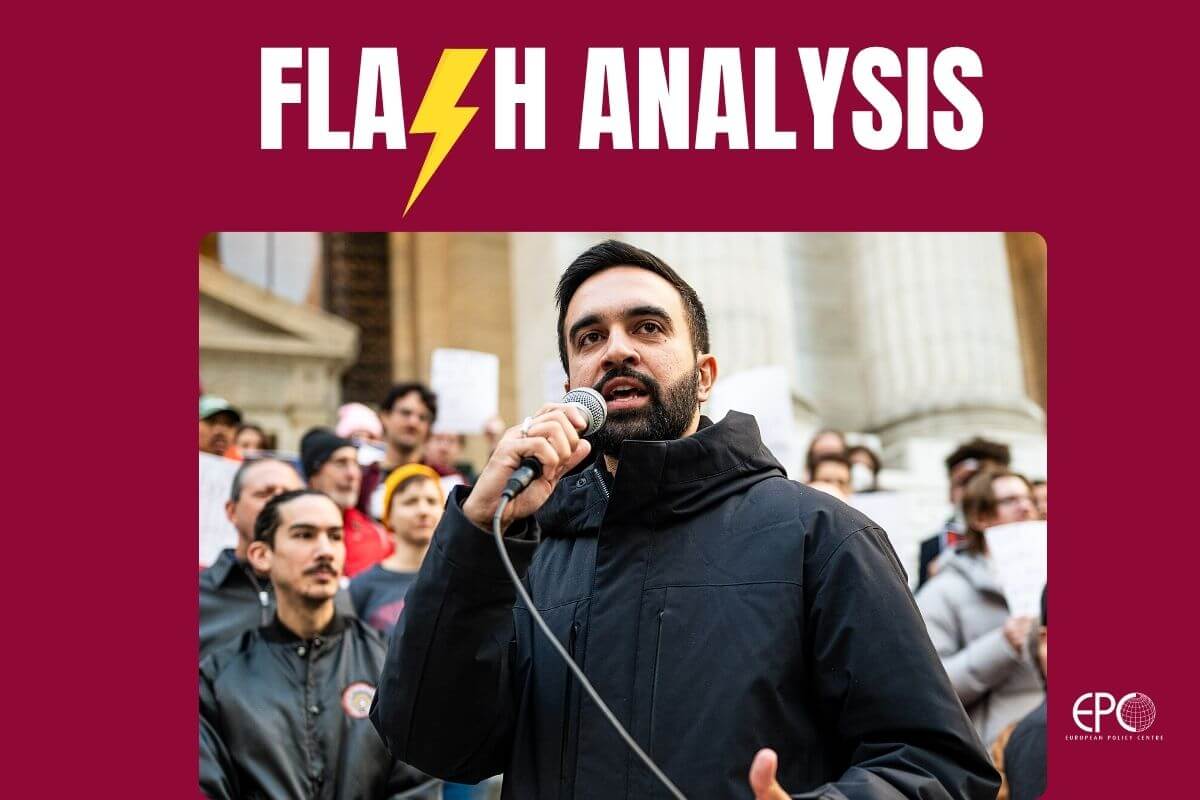

Two main takeaways for Europe emerge from the New York mayoral election of democratic socialist Zohran Mamdani.
First, affordability has become the defining political issue.
Mamdani’s campaign centred on making the city affordable: freezing rents, providing free buses and creating city-run groceries. This resonates beyond New York. Across Western democracies, the housing crisis, inflation, wage stagnation and widening inequality are shaping political behaviour. Affordability is now the main reason elections are won or lost.
Mamdani himself noted that this is the one point he shares with Trump: both campaigned on affordability. In the EU, rising economic precarity and weak government responses have fuelled the belief, particularly among young voters, that they do not live in a true democracy. This has contributed to the rise of authoritarian and radical alternatives, especially among young men, for whom economic precarity invokes nostalgia for a time when one salary sustained whole families and women remained at home. Many are turning to the far right because they believe it offers better solutions to the affordability crisis.
Mamdani’s victory suggests this shift is not inevitable. He won an impressive 84% of women under 29 and 68% of young New York men, proving that youth can be mobilised behind democratic platforms when affordability concerns are addressed directly.
Second, the political centre continues to lose ground.
Mamdani’s election fits a broader pattern of victories. The rise of democratic socialists in the US, Die Linke in Germany, La France Insoumise in France and the recent surge of the UK Green Party indicate that Europe’s political realignment is not only driven by the far right, but also by a growing far left.
Centrist parties increasingly cannot obtain majorities, form governments or pass legislation without forming coalitions with parties previously seen as “radical”. The question is no longer whether to work with parties on the extremes, but which ones. This is why the EPP is clearly flirting with the far right, especially in national governments. However, given the far right’s criticism of the EU, increasingly illiberal politics and links to Russia, it may be time to consider partnerships with pro-redistribution, democratic and internationalist forces on the far left.
The key lesson is not style, but substance.
Commentators may focus on Mamdani’s delivery and social-media savvy campaign, but the decisive factor was his clear programme to make life affordable.
For Europe’s pro-democratic and pro-European forces, addressing affordability is now a condition for political survival. It is in this fight that they might find better allies among pro-democratic and pro-redistribution far-left parties than among the far right.
Javier Carbonell is a Policy Analyst in the European Politics and Institutions Programme at the European Policy Centre.
The support the European Policy Center receives for its ongoing operations, or specifically for its publications, does not constitute an endorsement of their contents, which reflect the views of the authors only. Supporters and partners cannot be held responsible for any use that may be made of the information contained therein.