


Moldova’s Fragile Choice: Europe’s Promise or Russia’s Shadow
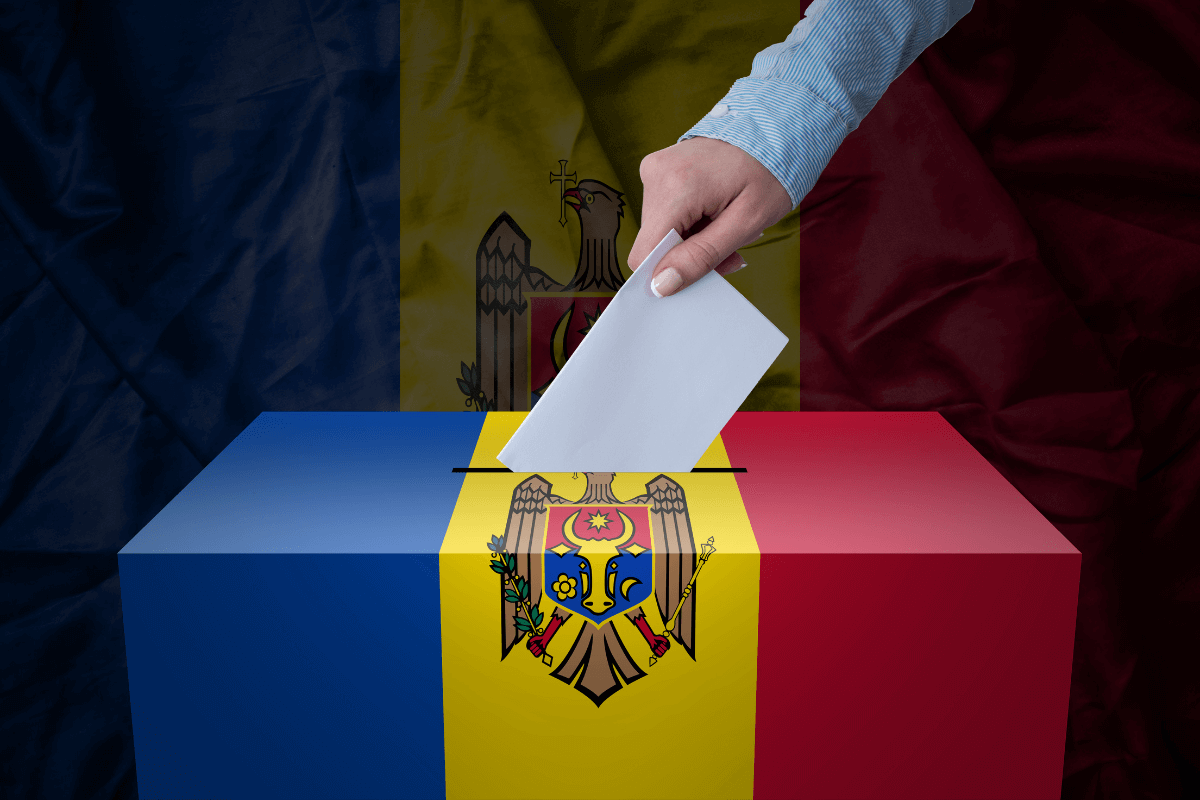

This Sunday’s parliamentary elections in Moldova are shaping up to be among the most consequential in the country’s post-Soviet history. With Russia’s war in Ukraine grinding on and the country situated squarely on the geopolitical fault line, this vote is widely framed as a referendum on its place in Europe.
On the surface, the ruling Party of Action and Solidarity (PAS) appears positioned to hold the advantage. Polls show pluralities favouring the EU path, though the 2024 referendum to enshrine that course in the constitution passed only narrowly, with just over 50 per cent support. Optimism about the country’s direction is stronger than at any time in recent memory, with polls showing a plurality of citizens who believe the country is moving in the right direction. The EU has reinforced this trajectory with major financial commitments, delivering around €250 million in 2025 in budget and social support linked to energy resilience alongside a broader multi-year growth facility worth up to €1.9 billion.
Yet stability is far from assured. Polling volatility underscores just how unsettled Moldova’s electorate remains, with a significant share still undecided. That uncertainty means PAS could end up anywhere between a modest plurality and a clear majority, depending on how smaller blocs such as Alternativa or Our Party fare against the electoral threshold.
The opposition, meanwhile, is fractious and compromised. The Patriotic Bloc, an alliance of Socialists and other pro-Russian figures, has surged in some polls but remains plagued by infighting and corruption scandals. The Alternativa Bloc, once seen as a dark horse, has faltered since Romania imposed a five-year Schengen-wide entry ban on its leader, Ion Ceban. And Our Party’s Renato Usatîi remains as unpredictable as ever, while his Russian business ties keep him under Moscow’s shadow.
The diaspora vote could again prove decisive. A record 301 polling stations are being opened abroad, with roughly 864,000 ballots printed for Moldovans overseas. PAS hopes to mobilise at least 200,000 diaspora voters, whose preferences have historically skewed heavily in favour of the European Union. At the same time, voting opportunities in Transnistria have been sharply limited, with only 12 polling stations this year compared to 30 in the 2024 presidential race, raising concerns about long-term reintegration.
Russia’s role looms in the background. President Maia Sandu has warned repeatedly of illicit funding flows, disinformation campaigns amplified by clergy and bots, and even cryptocurrency channels designed to tilt the playing field.
Investigations have exposed cash-for-protest operations linked to fugitive oligarch Ilan Șor’s networks, though these have been more disruptive than decisive. Western governments and independent media now suggest Moscow has drawn up a multilayered plan to undermine the vote, with tactics ranging from direct financial support to exploiting clergy networks and online influence campaigns.
At home, the government has taken aggressive action against illegal campaign financing, conducting over 200 raids and seizing millions in cash in recent weeks. These measures reflect a determination to secure electoral integrity but risk accusations of overreach, especially when opposition leaders are swiftly sanctioned or banned from travel. The conviction of Yevgenia Gutsul, the pro-Russian governor of Gagauzia, on charges of funnelling Russian money to the banned Șor party also illustrates how deeply involved law enforcement has become in securing this election. Meanwhile, the US just announced a $130 million investment in a new high-voltage transmission line to reduce Moldova’s energy dependence on Russia-linked sources, a reminder that Moldova’s energy security and electoral stability remain intertwined.
The likeliest outcome remains a PAS-led parliament, whether through a slim majority or a fragile coalition. What follows will matter more than the result itself, and Moldova’s politics are likely to stay finely balanced between external pressure and internal fragility. The government has cast this election as a stark choice between Europe and Russia. In truth, the deeper question is whether Moldova’s narrow pro-European consensus can hold under the weight of war next door and the relentless pressure of Russian influence. Moldova’s EU future will depend not only on pro-democracy forces prevailing on Sunday, but whether the winning coalition can endure.
Chris Kremidas-Courtney is a Senior Visiting Fellow at the European Policy Centre.
The support the European Policy Centre receives for its ongoing operations, or specifically for its publications, does not constitute an endorsement of their contents, which reflect the views of the authors only. Supporters and partners cannot be held responsible for any use that may be made of the information contained therein.

