

Russia’s Potemkin elections and implications for Ukraine
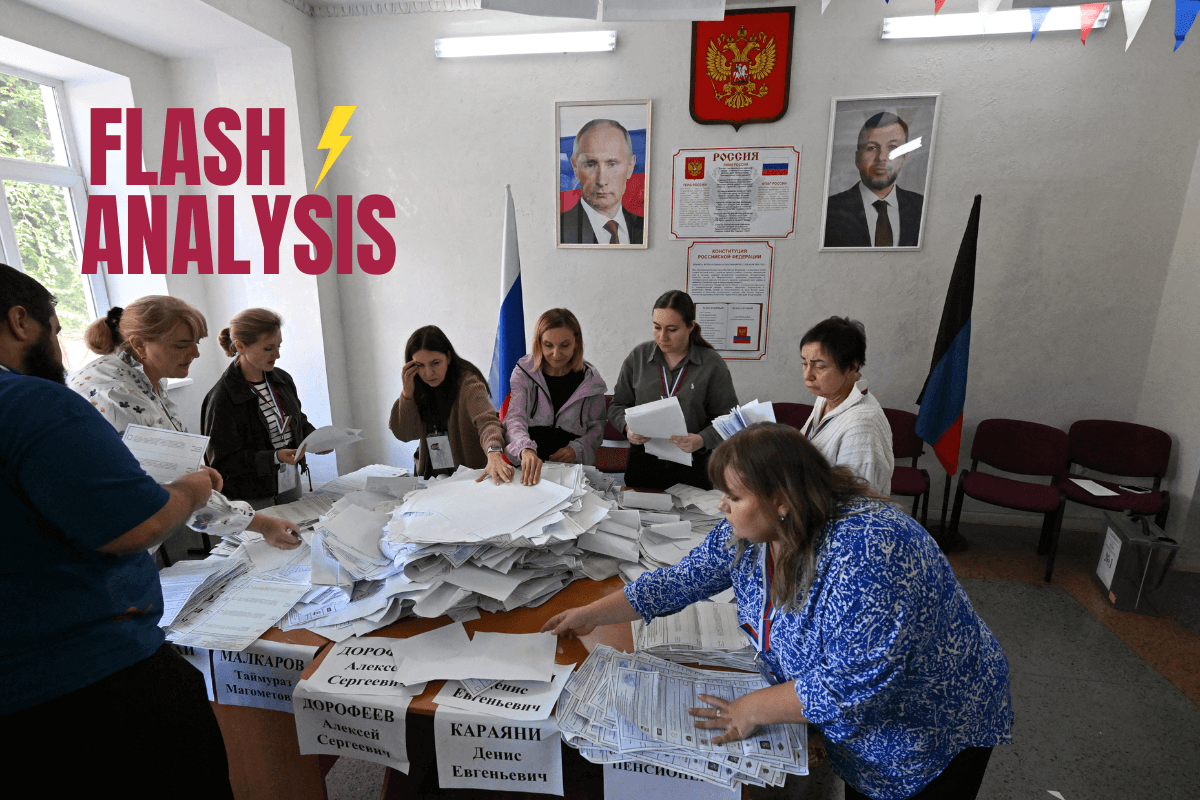

With the opposition jailed, exiled, excluded or dead, the ruling United Russia party’s “victory” in the September 18–20 Duma elections was a foregone conclusion. The Kremlin will use the result to claim public backing for its war in Ukraine and a mandate to further escalate.
An election without real choice
The vote took place in a system where dissent is not tolerated and meaningful opposition has been squeezed out. Most recently, Russia’s Supreme Court barred the liberal opposition Yabloko party from the ballot, depriving voters of the only registered party explicitly opposed to the invasion of Ukraine. Turnout was low at 57%, The elections matter to the Kremlin. They nominally legitimise the regime and its war, framed as an existential struggle not only over Ukraine but also over Russia’s sovereignty, identity and great-power status against what the Kremlin calls the collective West. Ukraine’s large-scale drone attacks during the vote were presented by Russia’s Foreign Ministry as an attempt by the “Zelensky junta and its Western sponsors” to disrupt the vote and intimidate Russian voters, while staging ballots in Ukraine’s temporarily occupied Ukrainian territories (TOTs) reinforced the effort to normalise the Kremlin’s illegal occupation. The message was clear: this was not simply an election, but another front in the war.
A manufactured mandate for war
Putin remains committed to his war objectives, including regime change in Ukraine. The elections are meaningful as a reflection of public opinion: according to the Levada Center, regarded as one of Russia’s more credible independent pollsters, 68% of respondents in August supported the actions of Russian forces in Ukraine. This reflects propaganda and information control, but also entrenched ideas within Russian society of Russia as a great power with a historic right to regional influence and a special entitlement in shaping the security and political order of its neighbours.
Many Russians have also adapted to the war. Ironically, Ukraine’s strikes on Russia, while making daily life harder for many, have reinforced the Kremlin’s siege narrative. While Russians want peace, for many of them this equates to Ukraine’s defeat.
Furthermore, Russia seems set to double down on escalating its war over the winter, including intensified strikes on critical and civilian infrastructure along with mobilizing some 600,000 additional troops. With winter fast approaching, Ukraine’s partners must urgently strengthen support for Kyiv and pressure Moscow, including:
- Accelerating military aid, including air defence, Patriot interceptors, counter-drone systems and ammunition.
- Providing transformers, generators, spare parts and mobile heating equipment to repair energy and utility infrastructure.
- Tightening sanctions enforcement, including action against Russia’s shadow fleet.
- Using frozen Russian assets faster to finance Ukraine’s defence, recovery and reconstruction.
- Sustaining Ukraine’s EU path by rapidly opening all negotiating chapters and integrating it further into EU programmes, markets and security cooperation.
EU member states should also stop issuing tourist visas to Russian citizens travelling to Europe for holidays to increase pressure on Russia’s urban middle classes.
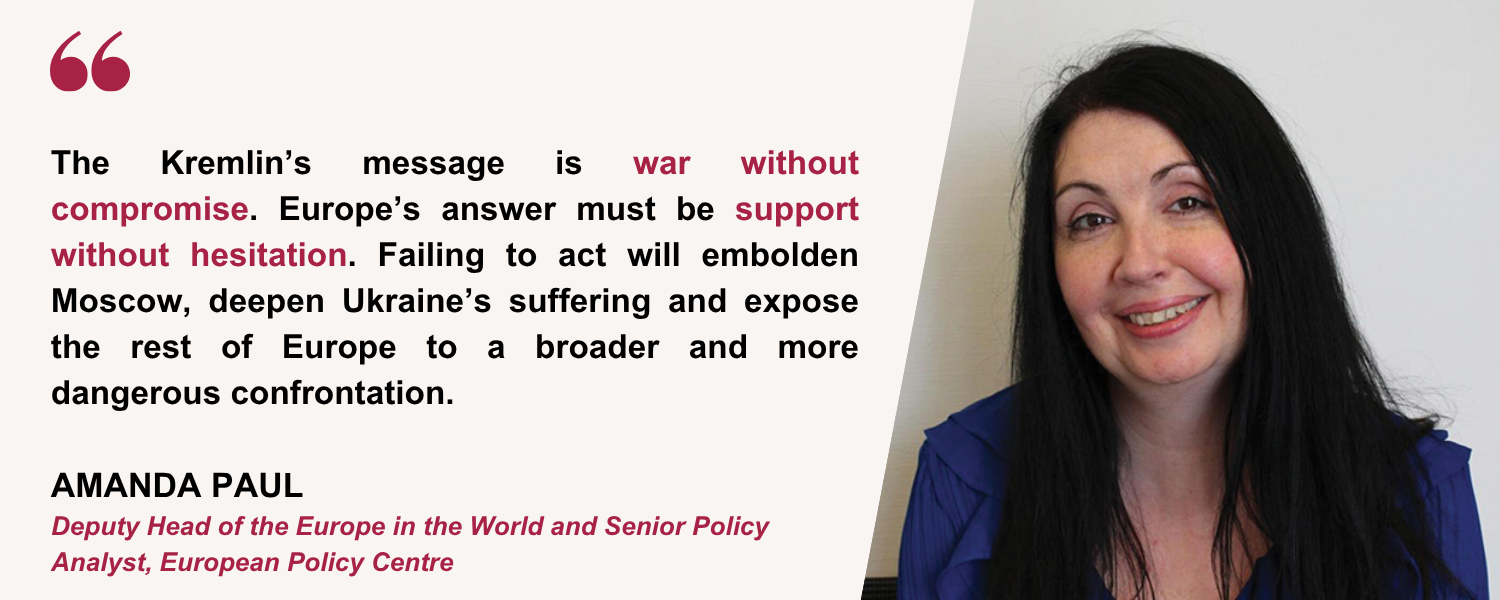
The Kremlin’s message is war without compromise. Europe’s answer must be support without hesitation. Failing to act will embolden Moscow, deepen Ukraine’s suffering and expose the rest of Europe to a broader and more dangerous confrontation.
Amanda Paul is Deputy Head of the Europe in the World Programme and Senior Policy Analyst.
The support the European Policy Centre receives for its ongoing operations, or specifically for its publications, does not constitute an endorsement of their contents, which reflect the views of the authors only. Supporters and partners cannot be held responsible for any use that may be made of the information contained therein.