


Shooting Down an Enemy Aircraft is Far from Simple Under International Law
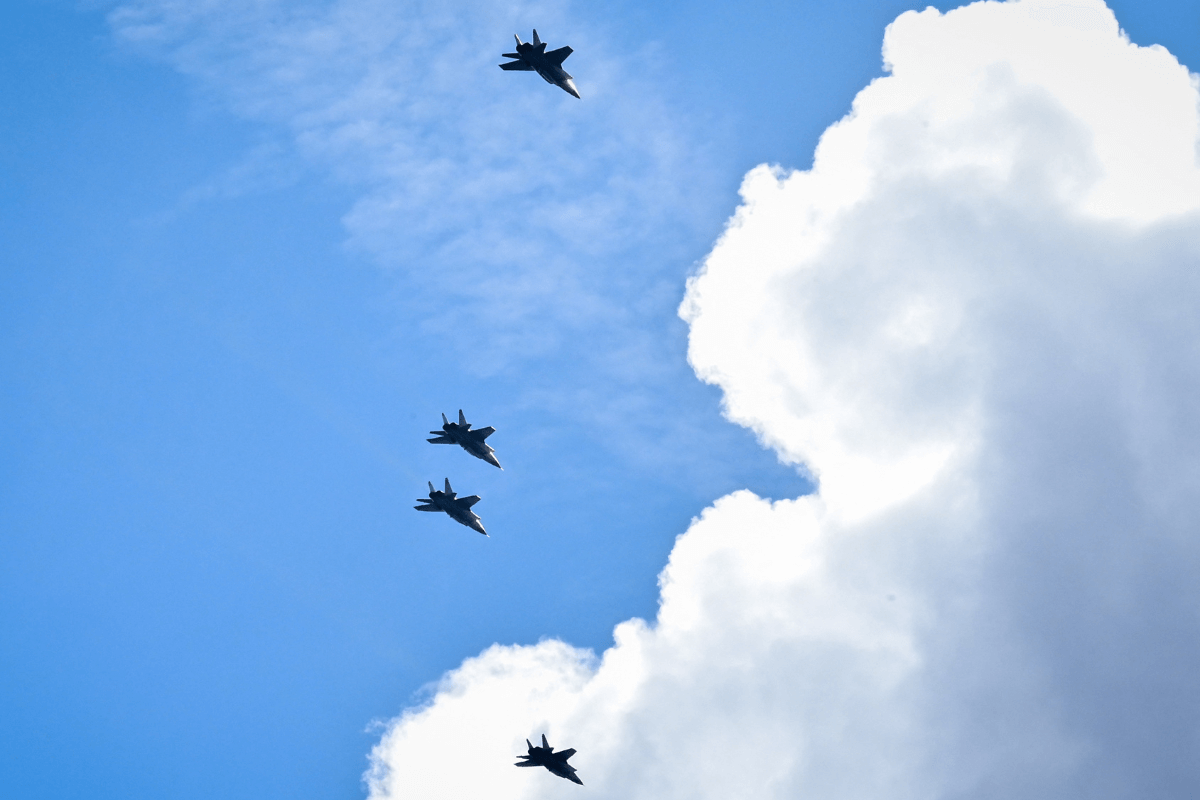

The recent incursions of Russian drones into Romania and Poland, along with violations of Estonian airspace by Russian fighter jets, have prompted strong warnings from NATO capitals. Polish Prime Minister Donald Tusk and Swedish Defence Minister Pål Jonson have both said their countries would shoot down any Russian aircraft that strays into allied skies. These warnings underscore a growing sense that the next airspace breach could force NATO to confront both the risks of escalation and the limits of international law.
International law does not give an automatic green light to shoot. Article 51 of the United Nations Charter allows a state to act in self-defence only if it is the victim of an “armed attack.” The International Court of Justice (ICJ), the UN’s principal judicial body, has made clear on multiple occasions that not every use of force qualifies as an armed attack. Only “the most grave forms of the use of force” meet that threshold, the ICJ declared in its landmark 1986 Nicaragua ruling. A warship’s unauthorised passage through territorial waters or a brief violation of airspace breaches sovereignty and may amount to a prohibited use of force, but it is not automatically an armed attack.
This distinction is crucial when comparing the drone incursions to Poland with the violations of Estonian airspace by Russian fighter jets. The drone incursion in Poland occurred at a time when Russia was relentlessly pounding Ukrainian cities with armed drones. Until the moment of impact, Poland could not know whether the drones were armed. Consequently, Warsaw had every reason to regard any drone entering its airspace as an act of aggression and destroying them therefore constituted an act of self-defence.
The legal analysis is different in the case of the Russian MiG-31s that crossed into Estonian airspace last week. An overflight by manned fighters is a violation of sovereignty and a use of force. But under international law it does not in itself amount to an armed attack. On that basis, NATO allies taking part in the Baltic Air Policing mission would not automatically have the right to shoot them down.
However, a state need not wait for the first bombs to fall or for missiles to hit their targets before acting in self-defence. Here, a strand of customary international law comes into play. After the 1837 Caroline incident, in which British forces destroyed a US vessel during a Canadian rebellion, US Secretary of State Daniel Webster articulated a principle that underpins the law of self-defence to this day. The ICJ has repeatedly referred to this principle in assessing whether a state’s action qualifies as necessary self-defence, for instance in the Oil Platforms ruling of 2003.
According to this principle, self-defence is justified only when responding to a threat that is “instant, overwhelming, leaving no choice of means and no moment for deliberation.” In today’s terms, if a squadron of enemy fighters is taking off toward a critical target, or if a large troop build-up across the border signals imminent hostile intent, a state may lawfully act before the first strike is launched.
Russia’s war in Ukraine, bellicose rhetoric against the West and repeated violations of NATO airspace are pushing Allies closer to the point where each jet or drone entering allied skies could reasonably be viewed as a threat that is “instant, overwhelming, leaving no choice of means and no moment for deliberation.” The risk is magnified when such incursions occur simultaneously, for example, a major drone swarm accompanied by a manned aircraft. When that moment arrives, international law would provide NATO with various legitimate courses of action, up to and including the most extreme measure if warranted.
Moscow should take NATO members’ warnings that they will not hesitate to use force against aircraft violating their sovereign airspace as a firm signal intended to deter further provocations. It should refrain from new incursions that could cost lives and further raise the risk of conflict.
Juraj Majcin is a Policy Analyst with the Europe in the World Programme at the European Policy Centre.
The support the European Policy Centre receives for its ongoing operations, or specifically for its publications, does not constitute an endorsement of their contents, which reflect the views of the authors only. Supporters and partners cannot be held responsible for any use that may be made of the information contained therein.