

The French canary in the European mine
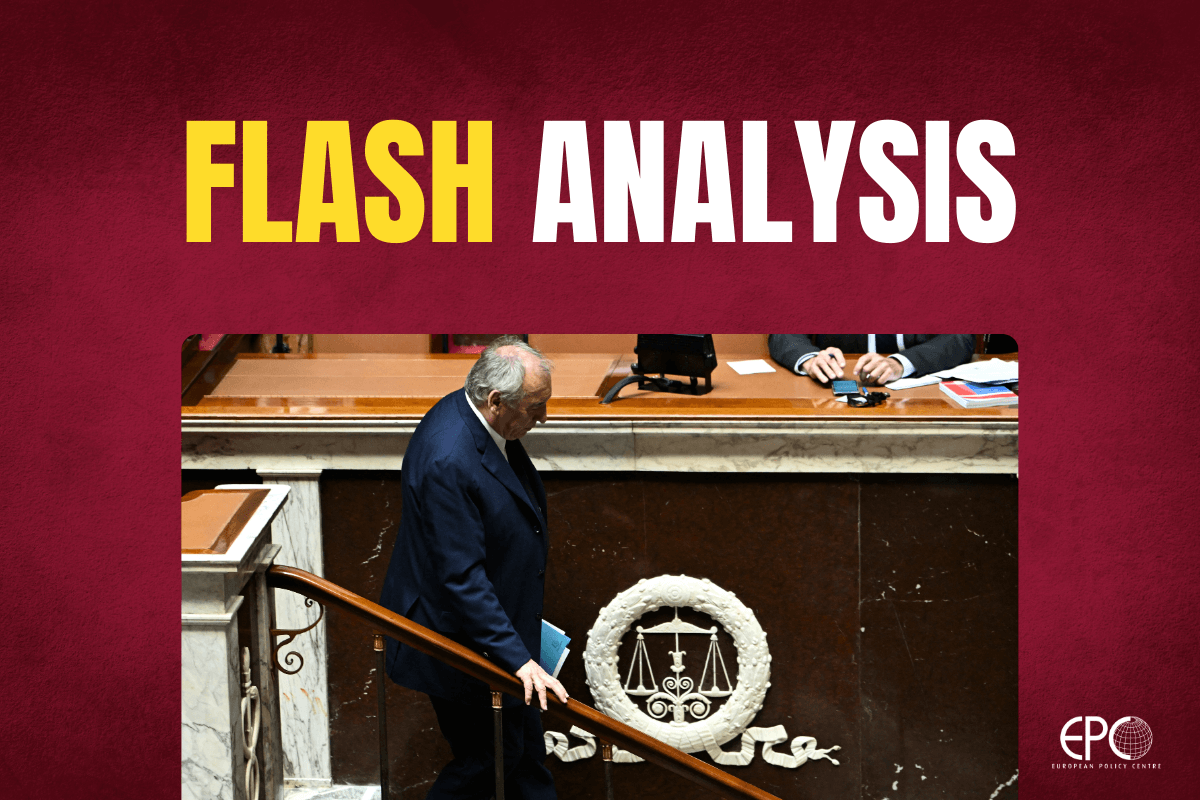

The fall of the François Bayrou-led French government, following a failed motion of confidence on 8 September, has plunged France into a new period of instability and uncertainty and should serve as a warning for the whole of the European Union.
President Emmanuel Macron must now appoint a third prime minister since dissolving the National Assembly in June 2024. Bets are open on whether he will pick a Socialist, another centrist like Bayrou, or a centre-right politician like Bayrou’s predecessor Michel Barnier. But one thing is certain, with the far-right National Rally (the biggest group in the Assembly) and the radical left determined to oppose anyone, the next PM will lead a minority government and will govern on borrowed time.
Macron’s next option is another dissolution. But that would likely result in a worse outcome than the previous one. The far-right would still remain ahead, and this time the ‘republican front’ aimed at stopping it from getting a majority in the second round would be less efficient due to the weakening of the centre and divisions in the left.
Beyond the next government(s), all eyes are already on 2027, when the next presidential election is set to take place, or sooner if Macron is forced to resign in the face of the political crisis – an unlikely scenario for now. The pre-election atmosphere will harden positions and make compromise difficult for everyone.
All this means that France’s immobility, party squabbles and navel-gazing is not going to stop, despite numerous internal and external challenges. The EU should be prepared for a French ‘retreat,’ with Paris unlikely to contribute fully to the response to the permacrisis.
In the short and medium-term, France is unlikely to meet its EU commitments on deficit reduction. Political uncertainty will stifle investment and economic activity, with spillover effects on the EU single market and eurozone. France will probably not ratify the EU trade deal with Mercosur, which is already fuelling opposition to the government. And under pressure from far-right leader Marine Le Pen, the country’s contribution to the EU budget is being called into question.
In the longer term, France shifting to the far-right has become a credible scenario. Would it then try to remain acceptable to EU partners – the Meloni model - or side with Viktor Orbán and his allies to hollow out the EU?
More generally, the slow breakdown of the French institutional framework shows that no member state is immune to populism, paralysis and decline. Not even in the Franco-German engine, without which little is possible. Europeans should worry.
Eric Maurice is a Policy Analyst in the European Politics and Institutions Programme at the European Policy Centre.
The support the European Policy Centre receives for its ongoing operations, or specifically for its publications, does not constitute an endorsement of their contents, which reflect the views of the authors only. Supporters and partners cannot be held responsible for any use that may be made of the information contained therein.