


Hungary gets EU cash – where are the safeguards?
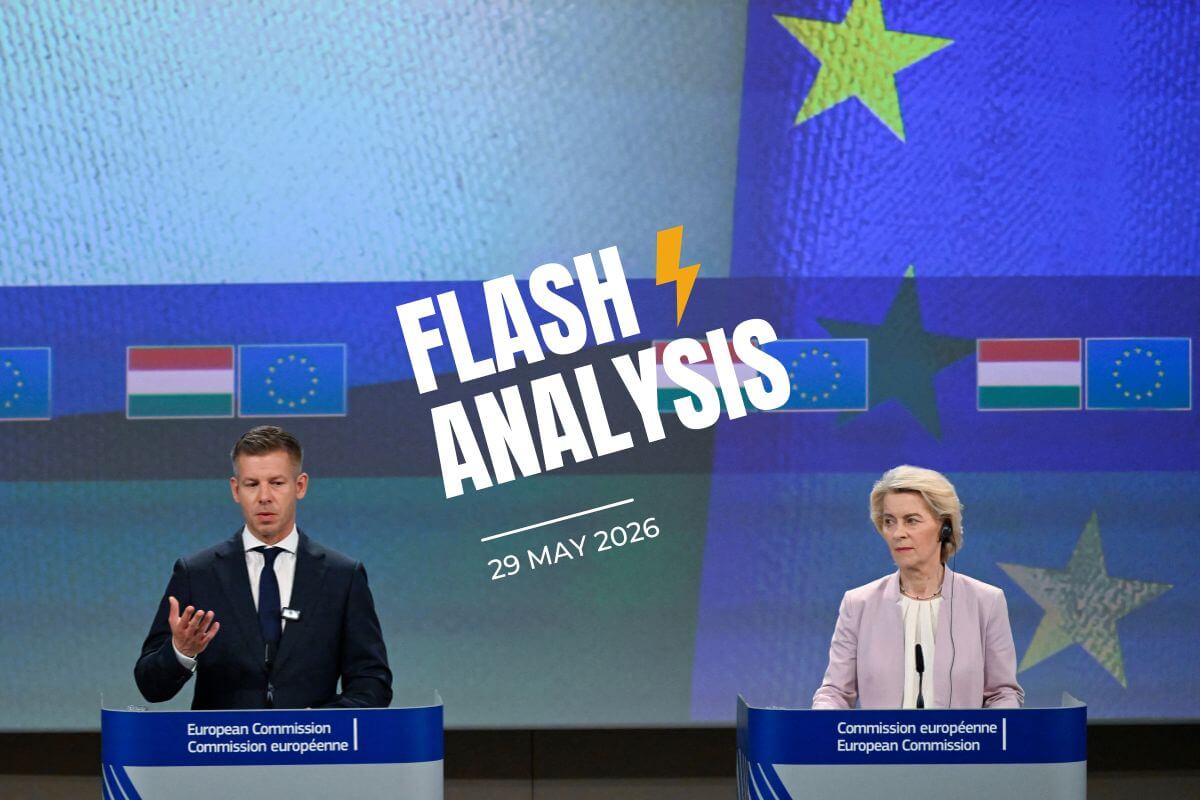

European Commission President Ursula von der Leyen and Hungarian Prime Minister Péter Magyar struck an agreement on 29 May to unlock €16.4 billion of EU funds previously blocked over rule-of-law violations.
The deal is good news for EU-Hungary relations and Magyar's domestic position. But it fails to address the long-term challenge of rule-of-law restoration.
In the short term, the agreement was probably necessary. Hungary is racing to claim €10.4 billion from the post-Covid-19 Recovery and Resilience Facility (RRF), with all milestones due by 31 August 2026, This leaves little room for delay and creates strong political incentives on both sides to move quickly. Releasing funds for energy, transport, housing and small businesses will allow Magyar to show voters that democratic change can deliver material results.
The Commission will also unfreeze €6.6 billion of Hungary’s cohesion fun ding. Von der Leyen explained that Magyar's government has made significant progress on rule of law and fundamental rights since taking office on 9 May. But rule-of-law restoration is a long and complex process. The Commission risks repeating the mistake it made with Poland in 2024: front-loading funds on the basis of initial commitments rather than waiting for effective implementation.
The real test after illiberal rule is not simply whether a new government passes reform laws, but whether democratic institutions are genuinely rebuilt. The agreement appears to prioritise speed and symbolism over the harder task of ensuring that reforms are durable and resistant to future backsliding.
That is the missed opportunity. If funds start flowing as soon as laws are adopted, without robust checks on implementation, enforcement and impact, democratic restoration risks becoming a box-ticking exercise. A post-illiberal transition needs benchmarks for judicial independence, safeguards against renewed state capture and mechanisms to suspend or recalibrate support if reforms stall. It also needs transparent verification so that Hungarian citizens and other member states can see whether recovery is real.
The Commission is right to support a government trying to turn the page on Orbánism. But it should also have used this moment to define how the EU supports democratic recovery after democratic erosion. By failing to do so, it may help Magyar politically today while missing the chance to build a lasting model for tomorrow.
Eric Maurice is a Policy Analyst in the European Politics and Institutions Programme at the European Policy Centre.
The support the European Policy Centre receives for its ongoing operations, or specifically for its publications, does not constitute an endorsement of their contents, which reflect the views of the authors only. Supporters and partners cannot be held responsible for any use that may be made of the information contained therein.