

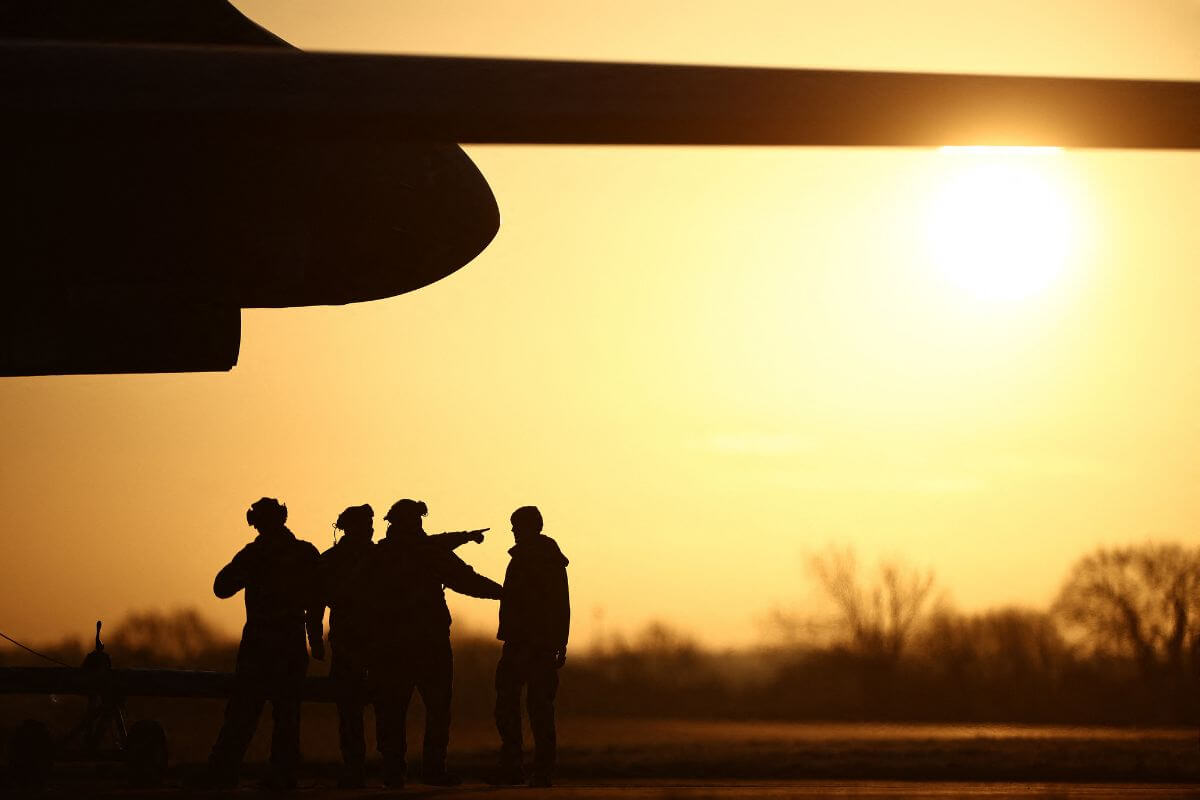

The war with Iran has exposed a familiar paradox in American power. The United States can strike targets with extraordinary precision, project force across multiple theatres, and sustain military dominance against almost any adversary. Yet translating that power into stable political outcomes has become far more difficult.
In 2002, during the leadup to the Iraq war, Immanuel Wallerstein warned that the United States faced a choice between managing decline or accelerating it. At the time, the claim sounded exaggerated. Washington had just demonstrated overwhelming military power in Afghanistan, Silicon Valley’s technological dominance appeared unassailable, and China remained years from economic parity. American primacy looked like a fixed feature of the international system. The core of Wallerstein’s argument now looks far more applicable.
The US remains the world’s most potent military actor and its technological ecosystem continues to generate extraordinary levels of innovation. The dollar still remains the backbone of the global financial system. But power is not measured only in capabilities but in the ability to shape outcomes, build coalitions, and maintain legitimacy.
Washington has demonstrated the ability to strike Iranian targets with precision and dominate across multiple domains. Yet the broader strategic environment has become harder to control. Disruptions to shipping through the Strait of Hormuz have rattled energy markets, and regional escalation risks drawing additional actors into the conflict. Even allies that share concerns about Iran’s regional behaviour question the campaign’s strategy.
Energy independence now gives the United States greater room for manoeuvre. It cushions the economic shock that once accompanied conflicts in the Gulf and provides leverage over states reliant on global energy markets. But it does not resolve the deeper challenge of maintaining legitimacy in a more diffuse international system. Military power supported by energy wealth is formidable but not omnipotent. It cannot guarantee the ability to shape political outcomes in a world where power is no longer concentrated in a single capital.
The result is military superiority that fails to produce desired strategic outcomes. Wallerstein warned of this dynamic in 2002. Hegemonic powers rarely collapse overnight since authority erodes before capability. The ability to compel outcomes gradually gives way to the need to enforce them.
In such moments, military action provides visible demonstrations of power and reassures domestic audiences. Yet each intervention consumes political capital. Allies grow wary, neutral states hedge, and rival powers exploit the turbulence.
This pattern has become familiar over the past half-century. Vietnam exposed the limits of overwhelming military force against determined resistance. Iraq demonstrated the difficulty of converting battlefield victory into stable governance. Afghanistan and Libya showed how even the world’s most capable armed forces struggle to impose durable outcomes. The Iran conflict risks joining this list.
None of this means the United States is about to disappear as a major power since it retains enormous advantages in technology, energy production, demographic resilience, and above all the NATO alliance that anchors it in the democratic world. These strengths will continue to shape international politics for decades.
What has changed is the international order itself.
The post-Cold War moment created unipolarity when the US appeared able to set the rules of the system almost single-handedly. That era ended years ago. China has emerged as a systemic competitor and middle powers have gained greater autonomy in their foreign and economic policies. Regional conflicts now unfold outside the control of any single global actor.
The world is not returning to Cold War bipolarity nor a stable multipolar order. Instead, a diffuse system is emerging in which power is widely distributed but unevenly exercised. For any leading state the challenge is no longer dominance but how to navigate this new landscape. Because no state can do so alone.
The United States still has the capacity to play a stabilising role. It retains alliances no rival can match, world-leading research institutions, and vibrant markets. Even despite internal polarization its political culture still projects ideals of liberty, rights, and civic participation. These strengths matter most when they reinforce legitimacy rather than coercion.
The question Wallerstein posed 24 years ago remains unresolved: Can the United States adapt to a world in which it remains powerful but no longer singular?
The answer will determine whether this new global order unfolds with relative stability or constant tumult.
History suggests decline is not the most dangerous phase in the life of a great power. The danger comes when leaders refuse to recognise it. The United States can still break that pattern, but only if it sees alliances like NATO not as constraints on American power, but as its foundation.
This Op-Ed was originally published by Euractiv. Read the original here.
Chris Kremidas-Courtney is a Senior Visiting Fellow at the European Policy Centre.
The support the European Policy Centre receives for its ongoing operations, or specifically for its publications, does not constitute an endorsement of their contents, which reflect the views of the authors only. Supporters and partners cannot be held responsible for any use that may be made of the information contained therein.