


Trump may shift, but the burden still falls on Europe
Donald Trump’s tougher tone on Russia, fresh threats of sanctions, and renewed commitments to supply arms to Ukraine are welcome developments, but Europe would be wrong to mistake them for a coherent U.S. strategy. Nor should it grow complacent. Vladimir Putin’s assault on Ukraine grinds on, undeterred. However commendable Trump’s shift may be it is no substitute for a European-led plan to secure Ukraine’s future. Like it or not, the burden of strategy now falls squarely on Europe’s shoulders.
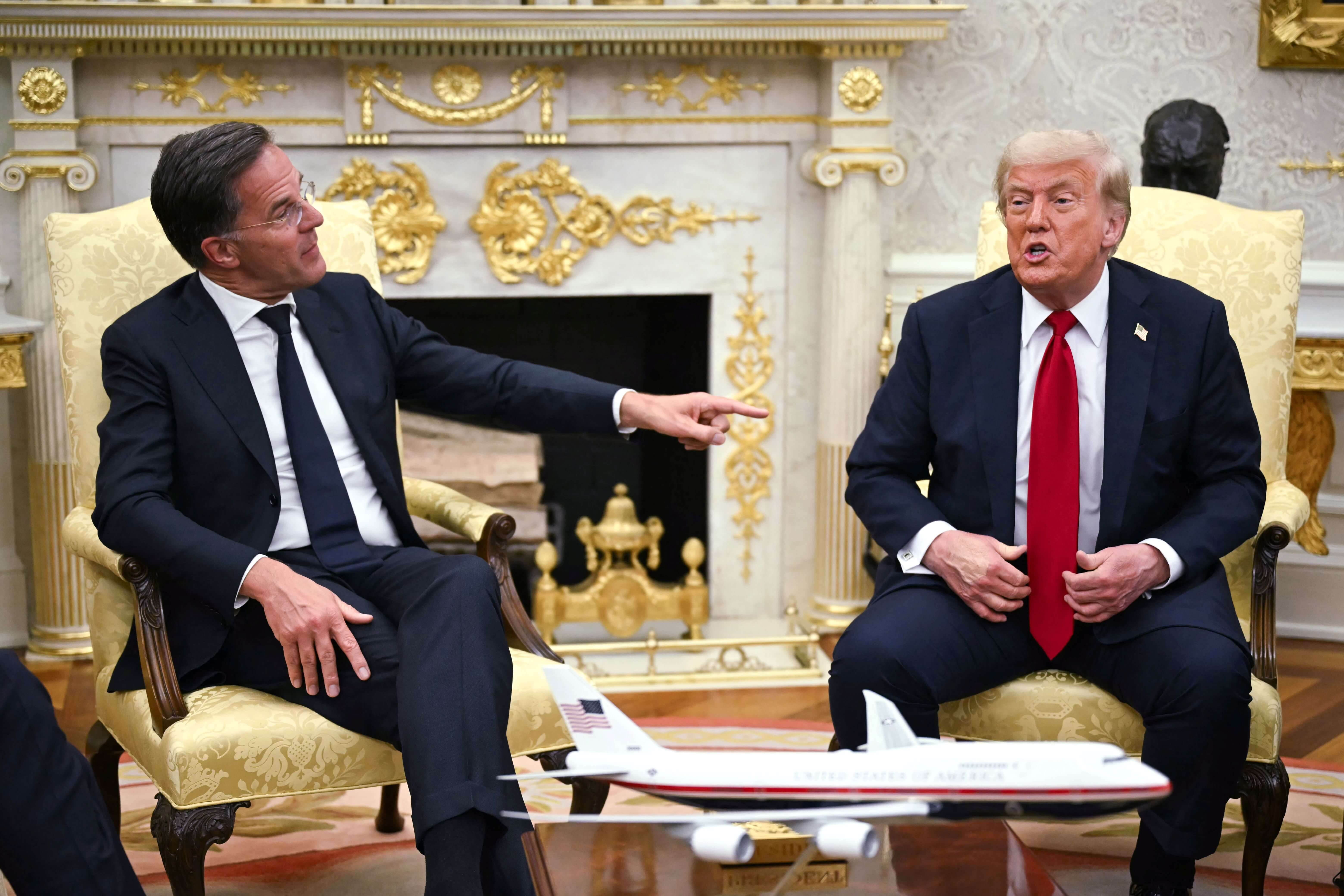
The 14 July meeting between US President Donald Trump and NATO Secretary General Mark Rutte marked a turning point: Trump appeared ready, at last, to step up support for Ukraine, distancing himself from his sympathetic stance toward Russian President Vladimir Putin. That shift is significant. Russia’s relentless bombing campaigns and continued ground offensive leave no doubt about Moscow’s lack of interest in genuine peace talks. Rutte’s charm offensive with Trump, along with steady pressure from European leaders, may be paying off.
While the shift in Donald Trump's position is commendable, the threat of sanctions and the decision to boost arms deliveries to Ukraine through NATO allies falls short of constituting a clear, comprehensive strategy to halt Russia’s aggression—a gap Trump often criticised in the Biden administration's approach.
Europeans should pay close attention to Trump’s offhand remark: “There is an ocean between us.” Geography matters. So does proximity to the threat. Europe cannot expect Americans to care more about Ukraine’s victory than they do. Trump’s push for European nations to pay the bill for US weapons deliveries, a demand now being met by Germany, Norway, Denmark, the Netherlands, and other nations, confirms a broader shift towards a more transactional relationship between Europe and the United States.
Trump’s proposal to give Putin 50 days to end the war or face new (secondary) sanctions is not the most important takeaway from this meeting. Ultimatums make little sense when cities are being bombed daily, and frontline troops face relentless assaults. Deadlines frequently slip with no action.
Sanctions, especially secondary sanctions targeting Russia’s enablers, should have been in place already. Yet even these measures seem improbable under Trump. His proposal for a 100% tariff on countries doing business with Russia lacks credibility, especially after Washington has only recently de-escalated its trade war with Beijing, a major importer of Russian oil. This also explains Trump’s lukewarm response to a Congressional proposal for a 500% tariff on countries importing Russian energy. Even if such tariffs were enacted, their deterrent effect would likely be limited, given Trump’s erratic trade record marked by sudden reversals and a tendency to target both allies and adversaries alike.
Meanwhile, Russia’s allies are closing ranks. China’s Foreign Minister, Wang Yi, recently told the EU’s top diplomat, Kaja Kallas, that Beijing cannot afford to see Moscow lose in Ukraine, arguing that such a defeat would accelerate US efforts to focus more extensively on the Indo-Pacific region. This admission underscores how deeply China is strategically invested in Russia’s survival—not just economically, but geopolitically. It also casts doubt on whether any economic pressure alone could alter Beijing’s calculus. China’s leadership seems to be increasingly motivated not by economic pragmatism, but by its long-term ambitions: reunification with Taiwan and expanding its influence across the Indo-Pacific.
The most consequential outcome of Rutte’s meeting was not Trump’s threat of sanctions, but the confirmed delivery of new US military supplies to Ukraine, especially additional Patriot missile systems. These are among the few capable of intercepting Russian ballistic missiles. With Ukrainian cities under constant attack, the swift arrival of such advanced weaponry is a crucial and much-needed boost.
Nevertheless, what Ukraine needs is not fluctuating support tied to political moods in Washington. It needs consistent, sustained military supplies tied to a clearly defined strategic endgame by its European backers. That can only happen if Europe starts treating Ukraine as part of its own defence architecture. Scenarios for the war's outcome could include full territorial recovery, to a frozen conflict akin to the Korean Peninsula—with an enduring Russian occupation of part of the country, to Ukraine’s EU integration under NATO or other security guarantees. It is European and Ukrainian policymakers who must choose their strategic goal and stick to it.
Right now, Putin perceives Europe as reactive—a follower rather than a leader. That perception must change. Europe must take Ukraine’s future into its own hands and be willing to act even in the absence of a guaranteed US “backstop.” For instance, European governments should consider using air defence systems stationed in NATO territory, particularly in Poland and Romania, to intercept Russian missiles targeting Western Ukraine. Such action could substantially reduce civilian casualties and limit damage to critical infrastructure, especially at a time when Russian missile strikes are intensifying.
Doing so would also boost Europe’s strategic credibility and strengthen deterrence vis-à-vis Russia, sending a clear signal to Putin that any aggression against NATO will be met with a united and resolute European response, even in the event of US disengagement.
Juraj Majcin is a Policy Analyst with the Europe in the World Programme at the European Policy Centre.
The support the European Policy Centre receives for its ongoing operations, or specifically for its publications, does not constitute an endorsement of their contents, which reflect the views of the authors only. Supporters and partners cannot be held responsible for any use that may be made of the information contained therein.