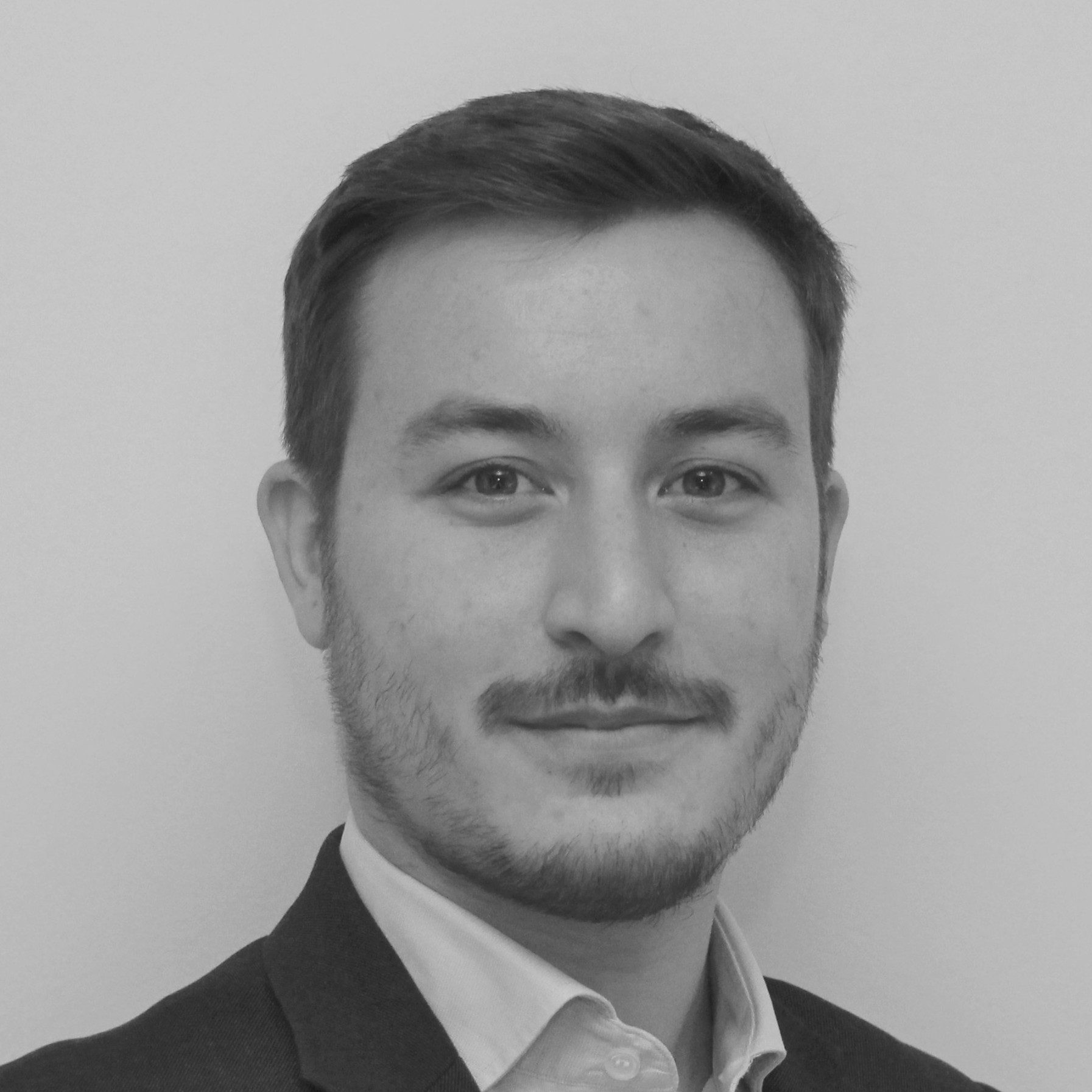
Ivano di Carlo is a Senior Policy Analyst in the Europe in the World Programme at the European Policy Centre (EPC). His research and policy work focuses on China’s foreign policy, international political economy, security and defence, and the Indo-Pacific region, with a particular focus on Southeast Asia.
Ivano has led the EU-funded EU–China Think Tank Exchanges, overseeing initiatives bringing together European and Chinese experts to foster policy dialogue and deepen mutual understanding. He also regularly facilitates the organisation of Track 1.5 and Track 2 dialogues. Alongside his work at the EPC, Ivano teaches “EU Foreign Policy” as a Visiting Professor at the European School of Political and Social Sciences (ESPOL), the Catholic University of Lille.
Prior to joining the EPC, he gained professional experience at NATO, the European Investment Bank, the University of Warwick, and Boeing. He holds a Master’s degree in International Political Economy from the University of Warwick, as well as a Double Master’s degree in Public Policy and Political Analysis from the Higher School of Economics in Moscow and in International Politics and Markets from the University of Bologna. He also holds a BA in International and Diplomatic Affairs from the University of Bologna.
PROGRAMME
PROJECTS
AREAS OF EXPERTISE
EU-Asia relations, China's foreign policy, EU and NATO common security and defence policy, ASEAN, Japan
CURRENT POSITIONS
Senior Policy Analyst
EDUCATION
MA in International Political Economy, University of Warwick
Double MA, International Politics and Markets, University of Bologna, Public Policy and Political Analysis, Higher School of Economics in Moscow
BA in International and Diplomatic Affairs, University of Bologna
LANGUAGES
Italian, English, French (Intermediate), Indonesian (basic), German (basic)
LONDON -- Chinese companies are bracing for tougher regulations in the European Union after leaders agreed on the need to address the bloc's trade deficit with China, which has ballooned to over 1 billion euros ($1.13 billion) a day.
Ivano di Carlo, a senior policy analyst at the European Policy Centre in Brussels, said that the Five Eyes countries had operated in a relatively predictable US policy environment under the Biden administration. But with Trump in the White House, “that certainty has faded amid more erratic messaging and actions”.
According to Carlo, this shift was unlikely to prompt countries to turn away from the alliance but it may strengthen incentives for governments and businesses to pursue a more “pragmatic re-engagement with China”.
“There is a hope that things will change given the importance of the U.S. for us ... but there is a realisation now that we are a bit more alone in this world,” said Ivano di Carlo, a senior policy analyst at the European Policy Centre.

Three-day forum co-hosted by CCG and CPAFFC brought together over 300 participants from nearly 60 countries to explore global governance, China-EU relations, and the evolving Middle East order.
Colonel Nalin Herath, Director General of the Institute for National Security Studies (INSS), recently concluded a significant visit to Nepal, where he engaged with scholars, policymakers, and thought leaders on pressing regional issues, including climate security and geopolitical resilience in South Asia.
Beijing has been outpacing Brussels in the so-called Global South. Now the EU must rethink its global game plan.
Ivano di Carlo wrote a section of a magazine edition published by Cecimo Magazine, which focused on The Impact of EU-ChinaRelations on the EU's Industrial Ambitions
Ivano di Carlo wrote an article for ISPI discussing The European Union and China: Between Economic Dependencies and Geopolitical Tensions.
In the European Parliament elections held in June, pro-European Union (EU) parties promoting European integration secured the parliamentary majority needed to approve the next structure of key EU institutions.
Following the election results, the European Council (the EU summit) announced the appointments of key EU institutions on June 27 (see figure). Ursula von der Leyen, the current President of the European Commission, was re-appointed.