

Climate adaptation can and should drive Europe’s Intergenerational Fairness Strategy
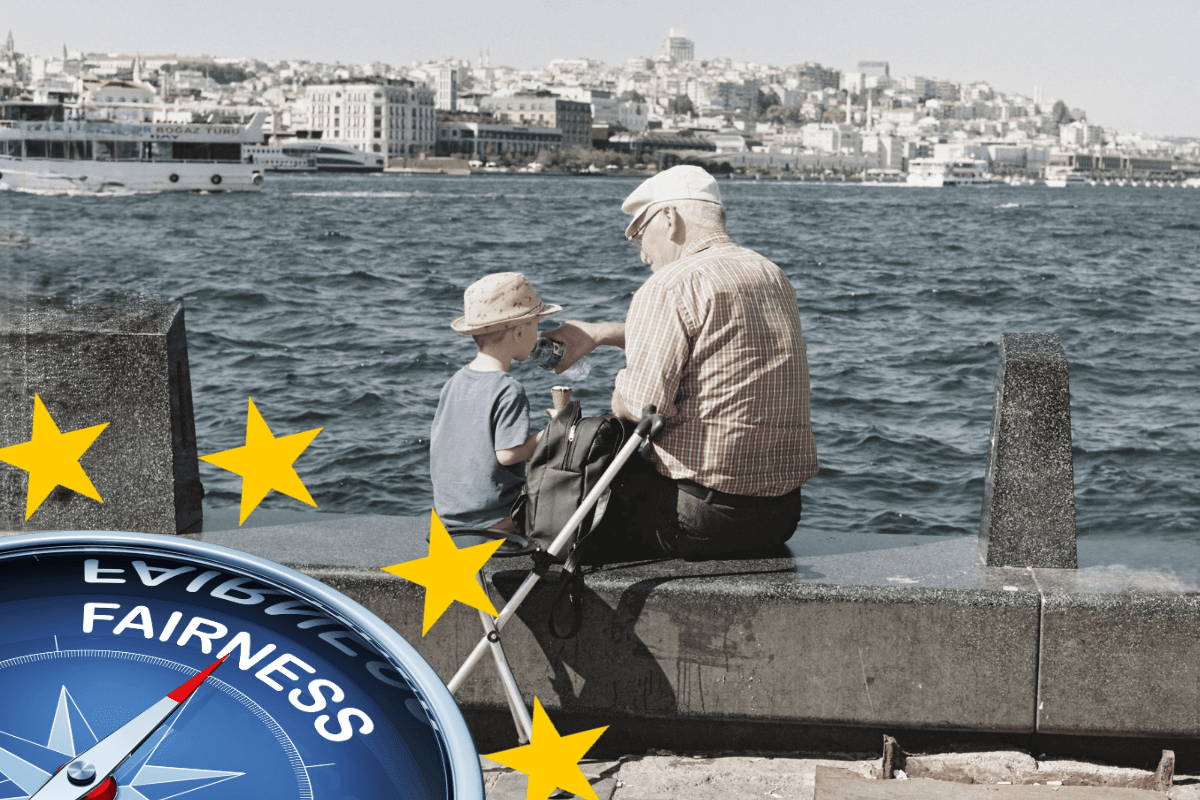

As the EU faces demographic decline and an aging population, the need to balance the interests of present and future generations is becoming increasingly urgent. The upcoming Intergenerational Fairness (IGF) Strategy, now in its drafting stage, aims to build a governance, monitoring and evaluation framework that embeds IGF principles across EU and member state policies, including across healthcare, social care and housing. As this framework solidifies, it is crucial to treat climate change as a cross-generational challenge – and climate adaptation as a multi-sectoral priority that can strengthen inclusive and future-proof policymaking.
Healthcare and social wellbeing
In 2024, a group of elderly women in Switzerland made headlines when the European Court of Human Rights ruled that their government had failed to take adequate action on climate change. The case reflects a growing reality in Europe: older generations with health and dependency risks are increasingly exposed to heatwaves, floods and rising energy costs. Between 2010 and 2022, Europe saw roughly 368,000 heat-related deaths, with 89.4% among people aged 65 and over. In 2024 alone, deaths reached 62,775.
Younger generations are no less affected. The European Environment Agency warns that by mid-century, climate change could drive escalating natural disasters, fiscal strain and deteriorating health outcomes. Weather- and climate-related extremes caused an estimated €822 billion in losses since 1980, with a quarter only occurring since 2021. In a high-warming scenario, inaction could cost a projected 7% of EU GDP, while insurance premiums for businesses and households are expected to rise.
With ageing populations, shrinking workforces and rising care demands, future generations will inherit the impacts of climate change and the fiscal burden of delayed adaptation – a growing intergenerational debt of inaction.
Housing
Housing clearly illustrates how adaptation links to IGF. Preparing buildings for the physical impacts of climate change, particularly amid Europe’s ongoing housing crisis, is critical. However, adaptation and housing are also tied to the energy transition: in 2022, the buildings sector accounted for roughly 34% of energy-related emissions in the EU. Simultaneously, millions still face energy poverty, rising bills and health risks from unclean heating, poor insulation and heat exposure.
Policies like the Energy Performance of Buildings Directive aim to promote energy renovations – a form of climate adaptation that prepares homes for extreme temperature fluctuations. Yet renovation also raises distributional concerns, including renovictions and unequal access to finance.
These tensions highlight why adaptation is such a critical area for IGF: its impacts cut across public health, economic prosperity, housing and social resilience – all foundations for a fair and future-proof society.
Governance and participation
The IGF Strategy also aims to improve governance and participation – principles that climate adaptation already embodies. Adaptation is inherently local and depends on public trust, collective ownership and solutions grounded in lived experience.
Across Europe, citizen-led approaches have already shaped cases of climate adaptation. In Finland, participatory budgeting resolved conflicts over building priorities, while in Denmark, citizen deliberation on sea-level rise produced decisions that politicians later described as difficult but economically sound. In Germany, coastal adaptation planning generated co-benefits such as strengthened local tourism.
Adaptation also captures the kind of long-term thinking the IGF Strategy seeks to embed through anticipatory governance. While strategic foresight often remains procedural in Brussels, adaptation planning requires modelling scenarios, reassessing risks, and adjusting course as new information emerges , putting long-term decision-making into practice.
These examples show that adaptation is not only compatible with IGF principles; it embodies them.
A forward-looking IGF Strategy
As the IGF Strategy takes shape and moves toward implementation, the EU must elevate climate adaptation within its approach. Adaptation has long been a gap in the EU policy landscape, with costs falling disproportionately on future generations – and increasingly on those alive today.
The Strategy’s horizontal nature offers a unique opportunity not only to embed IGF principles across sectors, but to identify and act on the synergies between adaptation and other priorities. Doing so would strengthen the EU and its communities with the resilience needed to face future climate impacts.
An EU that loses billions to disasters, suffers widespread health impacts and sees living standards decline is not equipped for the challenges of tomorrow. Investing in adaptation now is one of the most concrete ways to ensure fairness across generations and build a resilient, future-proof Europe.
Brooke Moore is a Policy Analyst in the Sustainable Prosperity for Europe Programme at the European Policy Centre.
The support the European Policy Centre receives for its ongoing operations, or specifically for its publications, does not constitute an endorsement of their contents, which reflect the views of the authors only. Supporters and partners cannot be held responsible for any use that may be made of the information contained therein.