

Green energy and European security: Reducing exposure in an era of shocks
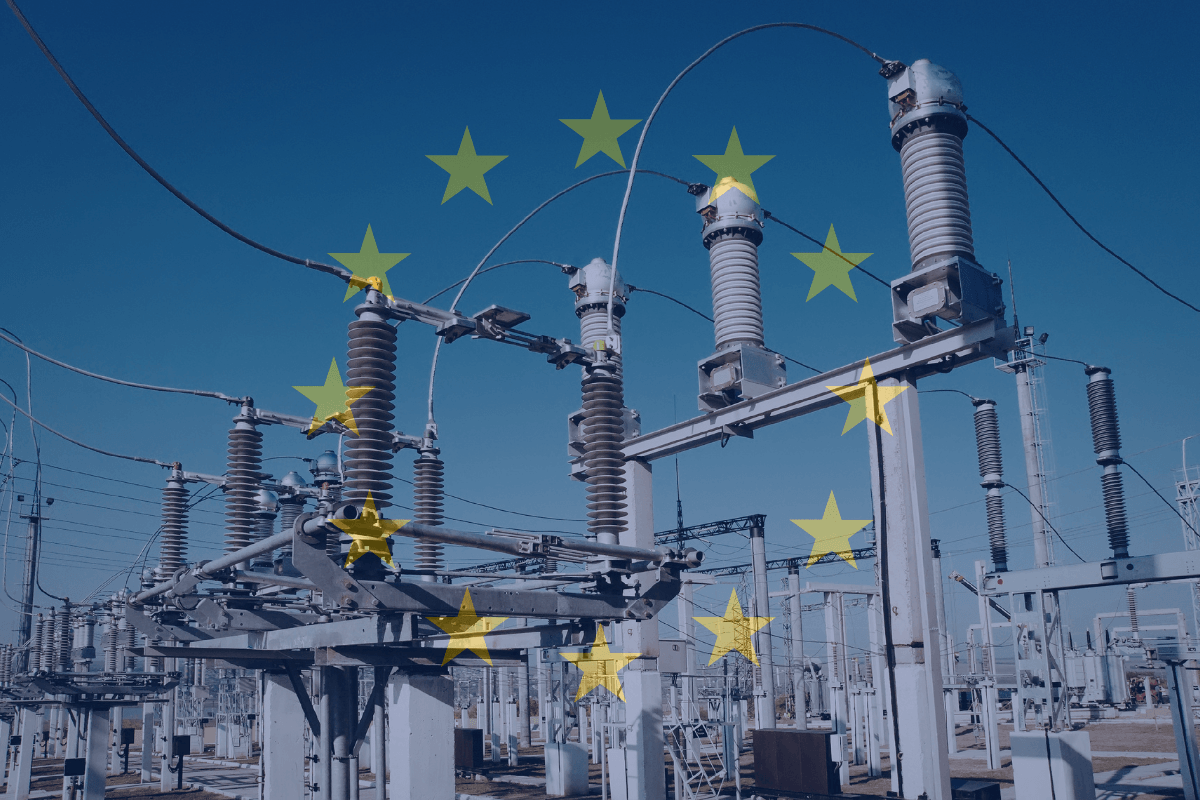

As the Iran war disrupts energy flows and injects volatility into global markets, the gap between those who prepared for systemic disruption and those who did not is becoming more visible.
Across Europe, governments are again scrambling to manage exposure. LNG cargoes are being rerouted, emergency measures are under consideration and industrial users are being warned to expect disruption.
China is neither insulated from global markets nor energy independent. Much of its supply still passes through vulnerable chokepoints like the Strait of Hormuz, but it has built buffers that allow it absorb this disruption with far less urgency.
Beijing’s push into renewables and electrification was never only about emissions. It was a long-term effort to shift energy demand away from imported fuel flows and into systems it can generate and manage domestically. Over time, this has reduced China’s exposure to maritime disruption, price volatility and the risk of sanctions.
Electrification shifts energy demand from contested global supply chains into domestically controlled systems. Over time, these changes reduce the share of energy demand tied to vulnerable global supply chains. Taken together, these changes are improving resilience and rebalancing away from exposure to energy shocks. China has leaned into this approach through a sustained build-out of domestic generation and electrified demand.
As climate security expert Erin Sikorsky has argued, renewable energy offers a distinct advantage: it does not need to pass through contested maritime routes. This is not only a climate argument, but a structural security shift. Energy that does not move cannot be interdicted, coerced or driven into price spikes by events far away.
Europe has taken meaningful steps since Russia’s invasion of Ukraine to diversify supply, accelerate renewables and reduce its energy dependence on Moscow. But these efforts still sit largely within climate and industrial policy frameworks rather than being managed as core elements of a broader security strategy.
The current crisis exposes the limits of that approach. Europe remains dependent on imported energy, much of which passes through vulnerable maritime chokepoints, leaving it exposed to disruptions it cannot control.
Historian Nils Gilman describes a divide between electrostates and petrostates beginning to take shape. China is positioning itself at the centre of an emerging system built around electrification and control over green industrial supply chains. The United States, alongside other major producers, is reinforcing a model based on fossil fuel abundance and the protection of existing flows.
Europe doesn’t fit neatly into either camp. It lacks the resource base to operate as a petrostate and doesn’t control the industrial supply chains that underpin the electrostate model. Instead, it finds itself navigating unevenly between the two, both across and within member states. Left unmanaged, that unevenness risks becoming a deeper source of division within the Union.
The strategic dilemma Europe now faces is how much exposure it is willing to accept, and to whom: The United States and Gulf states, or China?
Energy still sits primarily in climate and industrial policy since it has not yet been fully integrated into European security thinking. But resilience in this context is not only about preventing major disruptions. It is also about maintaining basic functions when they occur.
A more grounded European strategy would treat electrification as a strategic priority, shifting demand into systems that can be controlled domestically. It would view renewable capacity not only as a tool for cutting emissions, but to reduce exposure to external shocks. It would drive investment into storage and grid resilience as pillars of economic security, not just efficiency upgrades. It would also accept that some redundancy is necessary, even at a cost. In such a strategy, nuclear power cannot be ruled out, especially when repeated crises continue to show its value as a stabiliser.
The transatlantic context reinforces this point. The United States has shifted back towards a fossil fuel-based approach, supported by domestic resources and geographic insulation. Europe does not share these same advantages, and it cannot assume global markets will always compensate for disruption.
In a world dividing between systems built on fossil fuel flows and those built on electrification, resilience will depend on how much of an economy still relies on the former. Choices made over the next decade will determine how exposed European economies remain in this new era.
Europe still has time to reduce that exposure. But it can no longer claim it did not see this coming.
Chris Kremidas-Courtney is a Senior Visiting Fellow at the European Policy Centre.
The support the European Policy Centre receives for its ongoing operations, or specifically for its publications, does not constitute an endorsement of their contents, which reflect the views of the authors only. Supporters and partners cannot be held responsible for any use that may be made of the information contained therein.