

Iran at a crossroads: Repression, resistance and scenarios
Iran’s crisis is no longer episodic; it is structural. Sustained popular unrest is challenging the foundations of the clerical state. While external actors cannot determine Iran’s future, they can shape the costs of repression and the risks of escalation.
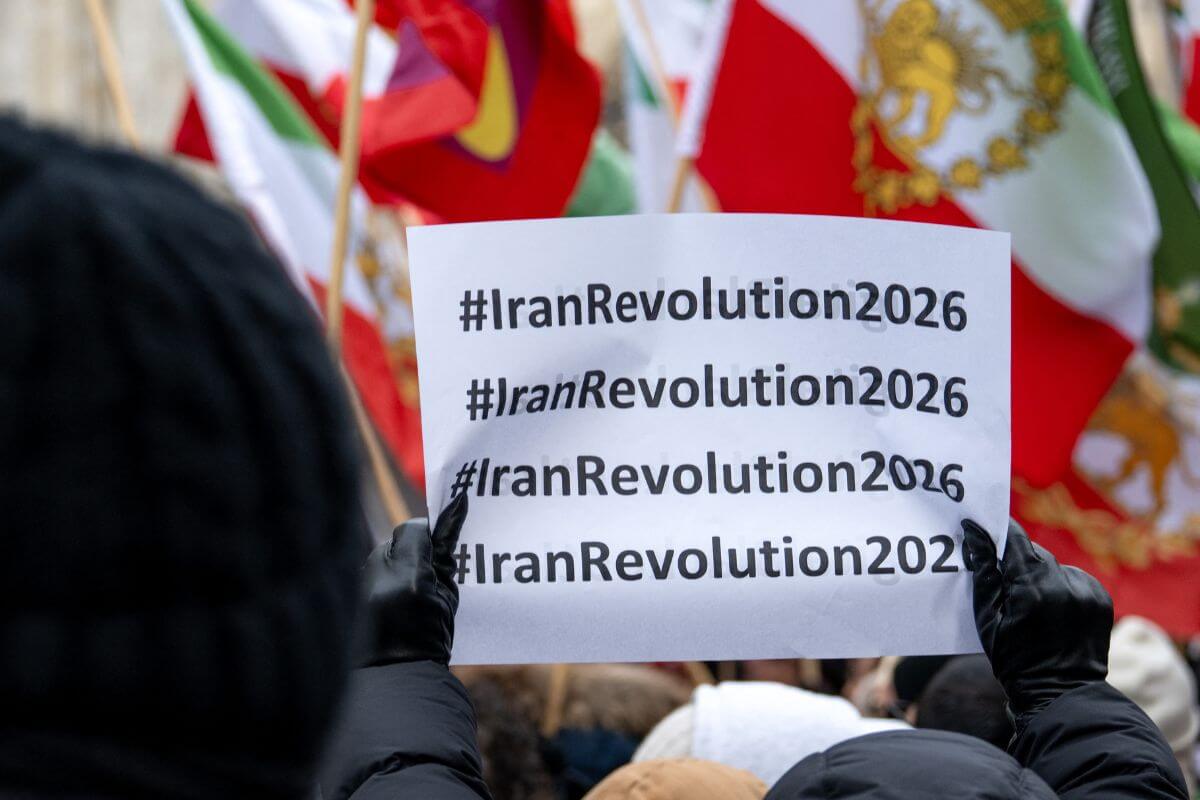
Anti-regime protests are now sweeping all 31 provinces, marking the broadest mobilisation since the 2022 “Woman, Life, Freedom" movement. Triggered by soaring inflation and currency depreciation, the protests reflect deeper frustrations rooted in long-term corruption, economic mismanagement, political repression and declining living standards. For many Iranians, the social contract has collapsed: loyalty no longer delivers security or prosperity. The streets have once again become the primary arena for demanding change.
What sets these protests apart is their unprecedented diversity. Unlike the 2009 Green Movement, which was largely urban and middle-class, or the 2017–18 protests led by economically marginalised groups, today’s demonstrations bring together industrial workers, teachers, pensioners, bazaar merchants, students, professionals, women, ethnic minorities and rural populations. This cross-class and cross-generational coalition makes repression more costly and grievances harder to isolate. The regime can no longer credibly portray dissent as elitist, marginal or externally manufactured, Even as Supreme Leader Ayatollah Ali Khamenei has branded protesters “Trump's helpers”.
The state’s response has followed a similar pattern: lethal force, mass arrests and internet shutdowns. The Iranian Revolutionary Guards Corps (IRGC), and its volunteer Basij militia show no restraint. Over 500 people have reportedly been killed, with thousands more injured. While repression may disrupt protests in the short term, it deepens public alienation. Each cycle of violence narrows the space for reformist compromise and reinforces the belief, particularly among younger Iranians, that meaningful change cannot occur within the framework of the Islamic Republic.
Unlike past unrest, the current mobilisation is sustained and geographically broad, indicating a deeper rupture between state and society. Still, a full bottom-up overthrow of the regime remains unlikely. Iranian civil society – encompassing labour movements, student and women’s networks, professional associations, cultural actors and informal grassroots initiatives – constitutes an important societal force and a potential catalyst for change. However, decades of repression have severely its organisational capacity. Additionally, a ‘silent majority’ remains on the sidelines, dissatisfied with the regime, but fearful that prolonged unrest could worsen economic conditions. This may limit the protests’ immediate revolutionary potential.
Even so, the clerical establishment faces mounting pressure. In previous crises, it has absorbed discontent by rotating elites or introducing new leadership; however, the lack of credible alternatives within the system restricts its room for manoeuvre. This has fuelled talk of a potential ‘Gorbachev moment’, in which partial reforms and internal fractures trigger systemic collapse. That point has not yet been reached. The regime retains significant coercive capacity, institutional resilience and a demonstrated willingness to kill as many people as it takes.
Iran’s deteriorating economy – exacerbated by sanctions – and the regime’s inability to address grievances leave it vulnerable to recurring unrest even if it manages to quell the current uprising. Several scenarios are possible. The regime may consolidate authoritarian rule, risking further international isolation. It could offer limited economic or social concessions without altering the political core, but this would not resolve structural problems. Alternatively, the regime could fragment, leading to political rupture and instability.
Sustained unrest may nonetheless reshape internal power balances. Under prolonged pressure, defections, including within the IRGC, cannot be ruled out. This may trigger changes in behaviour, personnel or limited reforms beyond the regime’s control. The IRGC could potentially sideline clerical leadership and act as a kingmaker in constructing a new order, as seen in Egypt and Pakistan – a trajectory unlikely to result in democratisation.
The protest movement itself lacks a unifying leader who could rally opposition and build an effective transition strategy. Former Crown Prince Reza Pahlavi, based in the US, has emerged as a symbolic figurehead for some protesters, resonating with parts of the diaspora and some Iranians who associate the monarchy with secularism and competence. However, his domestic influence is limited, and a restoration of the monarchy is broadly unpopular. His role is better understood as advocacy rather than leadership. Any future transition will require lessons from comparative cases, not symbolic leadership alone.
The transatlantic response
The EU has largely limited itself so far to condemning the crackdown. President Trump, by contrast, has warned that the US is “locked and loaded” and could intervene if repression intensifies. While such statements resonate with some protesters, they appear closer to strategic signalling than preparation for imminent military action.
When the US struck Iran’s nuclear enrichment sites in 2025, the circumstances were very different. Those strikes were embedded in a regional conflict and coordinated with Israel, following Israeli attacks on Iran’s nuclear programme and the killing of senior IRGC figures. A US-led intervention today would offer few strategic dividends for Trump. It would risk global energy market disruption and regional at a time when Washington is focused on stabilising Syria and preserving the fragile ceasefire in Gaza. Moreover, the legacy of the CIA-backed overthrow of nationalist Prime Minister Mohammad Mossadeq in 1953 remains a source of deep resentment among many Iranians. However, Washington could still intervene via measures short of overt force, such as cyber operations.
The EU and US should expand targeted sanctions against those involved in repression, including judges, security officials, prison administrators and technology firms enabling surveillance and internet shutdowns. In this context, the EU should consider designating the IRGC a terrorist organisation. Existing sanctions should further restrict regime-controlled companies and the IRGC’s economic empire. Coordination with regional allies is also essential to prepare for potential spillovers, including refugee movements or sudden collapse.
Amanda Paul is Deputy Head of the Europe in the World Programme and Senior Policy Analyst.
The support the European Policy Centre receives for its ongoing operations, or specifically for its publications, does not constitute an endorsement of their contents, which reflect the views of the authors only. Supporters and partners cannot be held responsible for any use that may be made of the information contained therein.