

One year of von der Leyen II: the risk of political overstretch
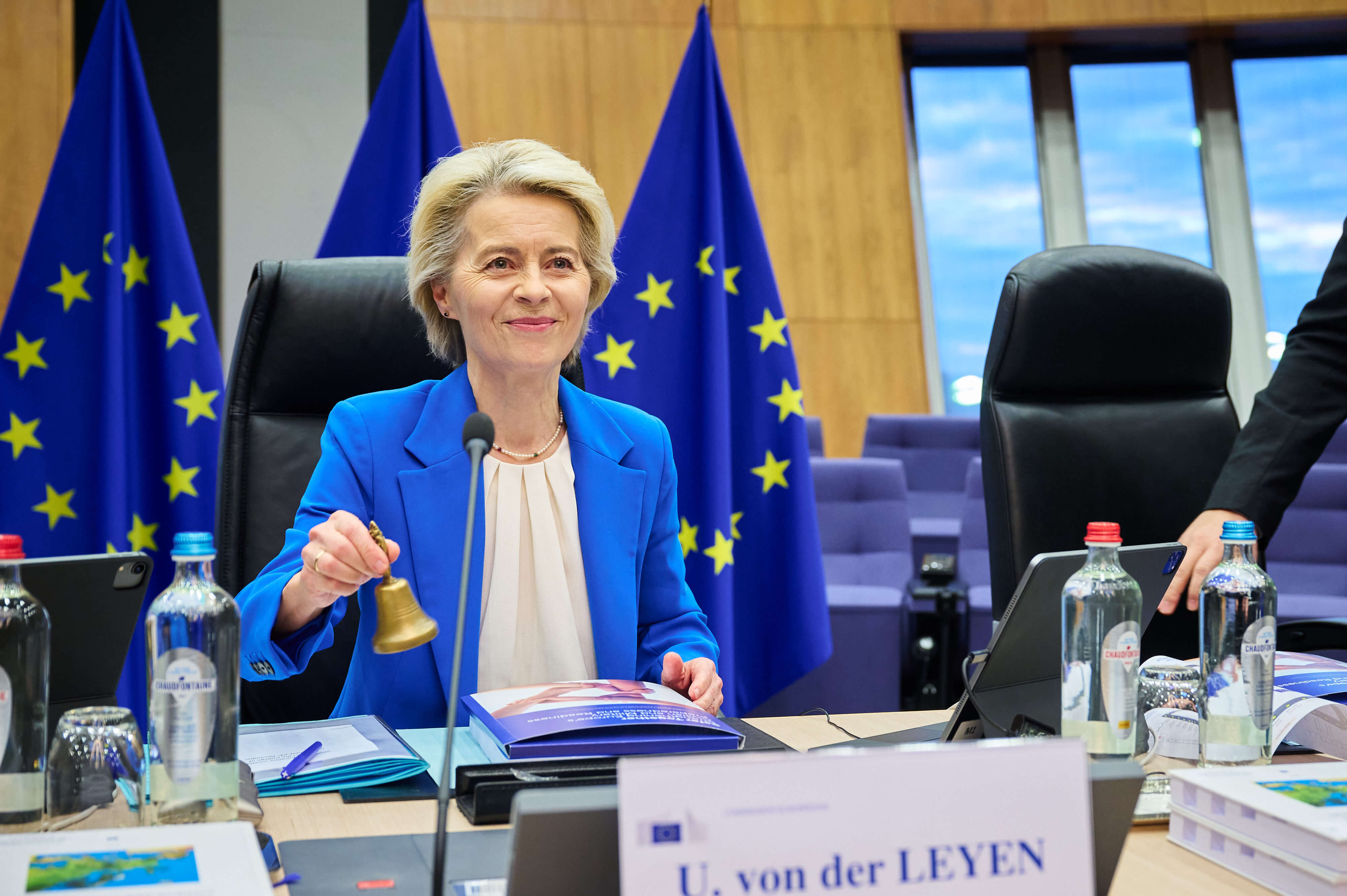

Ursula von der Leyen began her second term as president of the European Commission on 1 December 2024 as one of the strongest presidents in the institution’s history. She was re-elected by the European Parliament as a member of the EU’s most powerful party, the European Popular Party (EPP), asserted her authority over the College of Commissioners and moved quickly on the EU’s top priorities: defence and competitiveness. But a year on, her leadership style has increased the risk that the Commission fails to deliver on its objectives and promises.
The Commission president has appeared more interested in geopolitics and party politics than in designing future-oriented policies. She backtracked on previous priorities such as climate and digital, approached the competitiveness challenge largely through hastily designed legislative simplification, and overstepped her competences on defence and external relations, including on a potential peace deal in Ukraine. Meanwhile, she has failed to address key issues for the EU’s future, such as enlargement, EU reform or how to fund the Union’s needs in innovation and infrastructure.
In the meantime, von der Leyen also sought to manage relationships among the political groups that elected her in the European Parliament. She attempted to salvage the so-called ‘von der Leyen coalition’ by making wide-ranging promises, from tackling housing issues to pledging to end poverty and build a European electric car.
The von der Leyen II Commission risks political overstretch by being too active on too many issues and not hands-on enough where it can really make a difference. This increases the risk that the Commission will not deliver on promises it has made, widening an already visible rhetoric–action gap and leaving the EU insufficiently prepared for future challenges.
To improve the Commission’s capacity to act in the face of mounting global challenges and the rise of anti-EU forces across the Union, Ursula von der Leyen should:
1. Open the governance of the Commission
Ursula von der Leyen should decentralise leadership in the Commission, give Commissioners greater political and administrative space, improve transparency in decision-making and accept robust media scrutiny.
2. Refocus on the Commission’s competences
The Commission should make full use of the competences and expertise it already has, rather than seeking to expand them and risking failure. This applies in particular to defence, implementation of EU laws and policy domains where subsidiarity and broad buy-in are necessary to achieve political objectives.
3. Use leadership to prepare for the future
Ursula von der Leyen should use her political capital to initiate proposals for the Union’s future and advocate them to member states. She should be more proactive in preparing for enlargement and internal reform, tabling bold proposals to address the EU’s structural problems and develop options for an EU Enlargement Roadmap and Post-Accession Reform Plans. She should also explore all available options to meet the Union’s funding needs and foster strategic investment.
4. Improve interinstitutional relations
The Commission president should work to facilitate constructive relations with the European Council and the European Parliament. She should reduce institutional competition with EU leaders on defence and geopolitics and help streamline deliberations with the European Council. In parallel, she should refrain from entering party politics in her working relations with the Parliament. For the remainder of her mandate, she should avoid using the State of the Union address to make scattershot announcements designed to placate political groups.
5. Clarify the division of responsibilities between the Commission and other institutions
Ursula von der Leyen should work with European Council President Antonio Costa to formalise cooperation between the Commission and the European Council through an interinstitutional agreement. The EU’s growing ‘geopolitisation’ – in which community and intergovernmental issues increasingly intersect – and the Union’s transformation into a security actor in the face of the Russian threat and US disengagement both necessitate a clearer division of roles.
Read the full Discussion Paper here.
Eric Maurice is Policy Analyst in the European Politics and Institutions Programme at the European Policy Centre.
The support the European Policy Centre receives for its ongoing operations, or specifically for its publications, does not constitute an endorsement of their contents, which reflect the views of the authors only. Supporters and partners cannot be held responsible for any use that may be made of the information contained therein.