

Running on empty: the chemical shortage undermining European defence

Nitrocellulose is the chemical backbone of modern artillery, but Europe doesn’t make enough of it, and that shortfall could hamper the defence surge meant to support Ukraine and bolster NATO deterrence. Europe needs to pool demand and production, source more from reliable allies, and fast-track production plant conversions to ensure Europe's defence posture isn't undercut.
It is not a missile, a drone, or a tank that could derail Europe’s defence renaissance. Instead, it is an explosive chemical compound that is often overlooked.
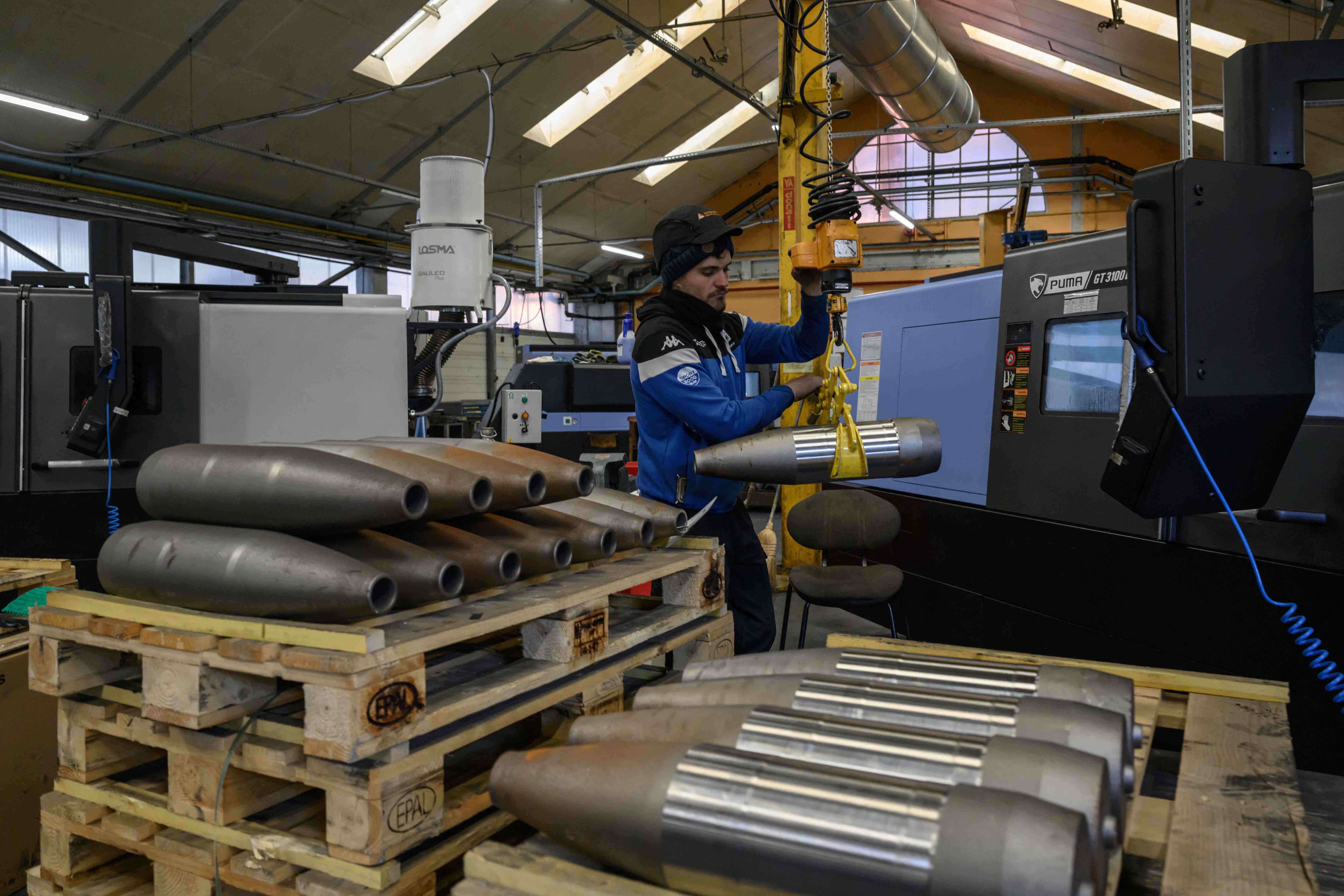
Nitrocellulose may sound technical, but it is surprisingly simple: a cotton-based compound that, when treated with acid, becomes the essential ingredient in modern artillery propellant. It’s what transforms 155mm shells from inert steel into the decisive force behind Europe’s defence revival. But here’s the problem; Europe doesn’t have enough of it. And without it, even the best defence plans risk falling short when it matters most.
After decades of post-Cold War complacency, Europe’s defence industries are scrambling to meet wartime-scale demand; not just for NATO’s deterrence, but to sustain Ukraine’s existential struggle against Russia’s brutal invasion. Brussels and EU national capitals have pledged to produce over one million shells per year by 2027. But there’s a catch—no nitrocellulose means no shells.
At present, Europe’s fragmented nitrocellulose supply chain is led by Rheinmetall in Germany, Eurenco in France, and a handful of others in Czechia and Poland. They can collectively produce around 4,500 to 10,000 tonnes annually, even with the recent influx of new orders. That may sound like a lot, but consider that supplying Ukraine could require over 6,000 tonnes per year, while Europe’s own 13,000+ tonne target pushes the total requirement closer to 20,000 tonnes. That leaves Europe to confront a shortfall of at least 10,000, and possibly upwards of 14,000 tonnes of nitrocellulose annually for the foreseeable future.
For years, Europe relied on imported nitrocellulose or on cotton linters sourced from Asia to feed its production. Much of this trade flowed from China, a country that is supporting Russia’s war effort and is unlikely to facilitate Europe’s defence surge as tensions mount over Ukraine and Taiwan. The rest came from civil-use plants which were designed for inks and lacquers, leaving them poorly suited to the rigorous safety and performance standards required for artillery-grade propellants.
Now, under pressure from a nearby war, Europe is racing to rebuild its capacity to produce this key material. France’s Eurenco has restarted its Bergerac production line. Rheinmetall is converting Hagedorn’s civilian plant in Lingen for military-grade nitrocellulose output. The Czechoslovak Group (CSG) has taken over Germany’s Walsrode facility and Poland is building a new production hub with Grupa Azoty. That said, some of these projects are still in the early stages, aiming to be ready by 2026 or later.
Italy, like many European nations, imports most of its military-grade nitrocellulose from the US, Germany, and Asia. Even major shell producers like Norway’s Nammo remain dependent on foreign nitrocellulose suppliers, underscoring the need for coordinated, cross-border stockpiling and production planning. Switzerland also contributes to Europe’s nitrocellulose supply through Nitrochemie’s Wimmis facility, which supports Rheinmetall’s expanding propellant production.
The UK currently lacks domestic nitrocellulose production capacity and relies on imports to sustain its munitions production. However, a promising development at BAE Systems is a novel manufacturing technology that eliminates the need for nitrocellulose and nitroglycerine. Still in the pilot stage, it could reach industrial maturity by late 2026. If successful, this approach could complement existing supply chains and reduce dependency on nitrocellulose, but it won’t arrive in time to address the acute shortages Europe and Ukraine face today.
The overall result is a classic European problem, with pockets of effort, insufficient coordination, and a race against time. To close the gap, Europe must act on three fronts.
Firstly, Europe must treat nitrocellulose as a strategic commodity, not just a precursor chemical. This means pooling demand signals at the EU and NATO levels and ensuring joint industrial planning, especially for raw materials like cotton linters. It means making full use of the EU funding available through the Ammunition Production Act and European Defence Fund to co-finance military-grade upgrades of existing nitrocellulose plants.
Secondly, we must urgently look beyond our borders to allies and friends like South Korea, the US, and India to help bridge the gap in the short term. Europe should secure emergency contracts for military-grade nitrocellulose for the near term and prioritise friendly suppliers of raw materials.
Finally, Europe must re-train the chemical industry workforce and ease regulatory bottlenecks. Nitrocellulose production is hazardous, and REACH rules rightly protect workers and the environment. Therefore, fast-tracked safety investments rather than bureaucratic inertia should guide manufacturing plant conversions.
Europe cannot sustain Ukraine and its own defence on promises alone. It needs action on multiple fronts, including on the production of nitrocellulose.
So, while fighting continues in Ukraine and new NATO formations take shape in frontline states, the quiet hum of nitrocellulose plants may prove more decisive than any summit declaration. A credible deterrent begins not with words, but action.
An inadequate supply chain makes for a hollow deterrent, and Europe cannot afford to bluff.
Chris Kremidas-Courtney is a Senior Visiting Fellow at the European Policy Centre.
The support the European Policy Centre receives for its ongoing operations, or specifically for its publications, does not constitute an endorsement of their contents, which reflect the views of the authors only. Supporters and partners cannot be held responsible for any use that may be made of the information contained therein.