

Why Europe must respond to US actions in Venezuela, threats to Greenland
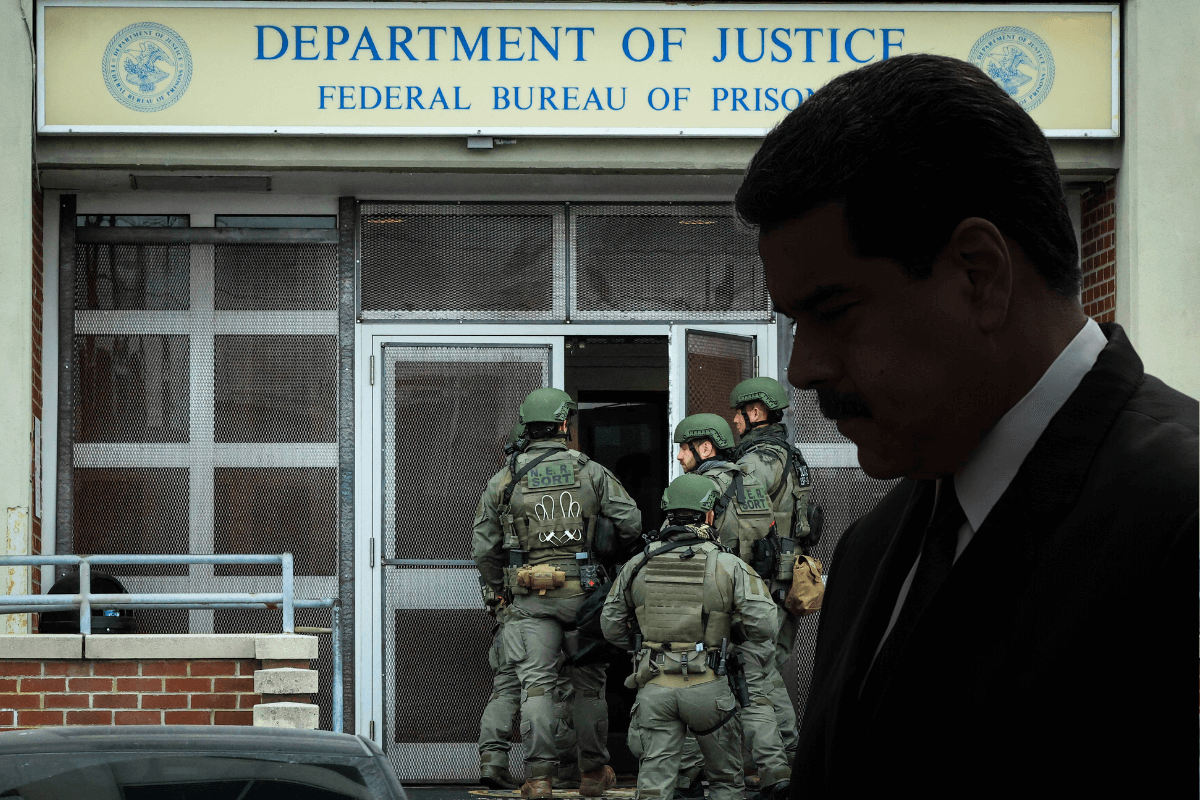

Nicolás Maduro will not be missed. He was neither a legitimate leader of Venezuela nor recognised as such by the European Union or the United States. His rule was marked by grave human rights violations, economic collapse and the forced exile of millions of Venezuelans.
From the perspective of international law, however, the US strike on Venezuela and abduction of its leader constitute a clear violation of the prohibition on the threat or use of force. The operation was not authorised by the UN Security Council, nor can the alleged threat posed by ‘narco-terrorists’ to the United States credibly meet the threshold required to justify self-defence.
More troubling still than the violation itself is the reasoning used to justify it.
How Washington used to justify force
Previous US administrations have also violated international law, sometimes on a large scale. But they usually tried to present those actions within recognised legal frameworks.
The 1999 US-led NATO campaign in Kosovo, for example, was justified as a humanitarian intervention to prevent atrocities committed by the Milošević regime against Kosovo Albanians. To justify the 2003 invasion of Iraq, the Bush administration pointed to Iraq’s violations of earlier UN Security Council resolutions adopted after the first Gulf War, which were intended to prevent Saddam Hussein from developing weapons of mass destruction (WMDs). The United States also assembled a coalition of more than 30 nations that declared their support for the invasion.
Similarly, the 2017 US strikes in Syria were justified as a means to enforce the international ban on chemical weapons, following what the Trump administration described as the Assad regime’s repeated chemical attacks on its own population during the civil war.
At times, the United States has sought and even obtained Security Council authorisation to use force, as it did in Kuwait in 1991, Bosnia in 1992 and Libya in 2011.
Venezuela: gunboat diplomacy and limited sovereignty
Venezuela is different. Instead of invoking internationally recognised legal principles, the Trump administration has justified its operation through US indictments of Maduro for drug-trafficking charges and explicitly pointed to the 1989 arrest of Panama’s Manuel Noriega as precedent. However, international law provides no basis for using military force against another state to enforce domestic criminal law.
Even more striking is the administration’s the reference to the Monroe Doctrine, a 19th-century US policy declaring that any European interference in the Americas would be viewed as a hostile act against the United States, declaring the Americas its exclusive sphere of influence. This time, the doctrine was invoked against China, Iran and Russia, whose presence in Venezuela Washington sees as a threat.
However, the Monroe Doctrine goes beyond excluding other major powers from the Americas. Its direct consequence is the erosion of state sovereignty within the US’s sphere of influence.
By declaring that the United States would “run Venezuela”, openly threatening to send troops if Washington is dissatisfied with how the country is governed and floating control over its oil reserves, Trump appears intent on reducing Venezuela to a de facto United States protectorate.
Europe at risk
What is unfolding resembles classic gunboat diplomacy, with one state coercing another into submission. For Europe, such aggression from its closest ally is troubling. The European Union often adheres to international law even when doing so runs counter to its immediate interests. The most recent example is the EU’s refusal to use frozen Russian assets to fund Ukraine based on legal arguments related to state immunity. Another is the decision by Finnish courts to dismiss efforts to prosecute the crew responsible for cutting undersea cables since the incident occurred in international waters.
The problem is that if Europe plays by the rules alone, it risks exposing itself to similar coercion and aggression. If sovereignty can be limited by power and proximity, is Russian President Vladimir Putin’s war against Ukraine justified? What about his long-term goal of rolling NATO back to its pre-1997 borders? Does this invite China to move on Taiwan under the banner of fighting separatism? Or is Denmark next, with Trump laying claim to Greenland?
To uphold international law, states must denounce blatant violations of international norms. However, Europe has been notably cautious on Venezuela. Except for Spain, which joined five Latin American countries (Brazil, Chile, Colombia, Mexico and Uruguay) in condemning the invasion, most European governments have refrained from directly criticising the United States, wary of alienating a key NATO ally.
Trump’s recent remarks about “dealing with Greenland” within the next two months require a firmer response. The statement by European leaders reaffirming Danish sovereignty over the island was a necessary first step, but must be followed by stronger political signals.
One option would be an international summit on Arctic security in Nuuk, organised by the governments of Denmark and Greenland together with the EU, NATO and key non-EU partners such as the United Kingdom, Canada and Norway. The United States should be invited. This would both reaffirm Danish sovereignty over Greenland and address Arctic security, the very reason why Donald Trump claims the United States ‘needs’ the island.
Juraj Majcin is a Policy Analyst at the European Policy Centre
The support the European Policy Centre receives for its ongoing operations, or specifically for its publications, does not constitute an endorsement of their contents, which reflect the views of the authors only. Supporters and partners cannot be held responsible for any use that may be made of the information contained therein.